 USD
Glass Back Cover Wholesale: Original Pulled vs Aftermarket — How to Choose
2026-10-15
⚠️ Price Note: The wholesale prices below are reference ranges for bulk buyers. Market conditions fluctuate — contact us for the latest quote. Our contact details are at the bottom of this article.
If you wholesale glass back covers, you've heard this question: "Is this original pulled or aftermarket?"
It matters. Original pulled and aftermarket covers come from completely different sources, perform differently, and sell to different customers. If you don't know the difference, you'll either overpay for the wrong stock or lose a client who installs one and never comes back.
This guide breaks down both types at the technical level, tells you what to check before you buy, and explains how we handle wholesale — $300 mixed trial orders, so you can test quality before committing to a reorder.
Browse our full glass back cover catalog here.
📋 Table of Contents
- 1. Original Pulled vs Aftermarket: What's the Real Difference?
- 2. Technical Differences That Actually Matter
- 3. Quality Grades: What to Look For
- 4. Price Ranges
- 5. Which iPhone Models Are Worth Stocking
- 6. How to Source
- 7. How to Match Stock to Your Customers
- 8. $300 Mixed Trial — Test Quality Before You Reorder
- 9. Wholesale Buyer FAQ
- 10. Contact Us
1. Original Pulled vs Aftermarket: What's the Real Difference?
There are two types of glass back covers on the wholesale market: original pulled and aftermarket. This isn't "genuine vs fake." It's about where the part comes from.
Original Pulled
These are Apple OEM glass backs removed from dead or refurbished phones. Original glass, original color, original coating.
- Apple OEM glass with the same strength and coating as the panel on the customer's phone
- The adhesive layer is destroyed during removal — it needs re-gluing or new tape
- May have light scratches or edge chips; graded by condition
- Best color match because it's the factory finish
- Limited supply — one dead phone yields one back cover
Aftermarket
These are newly manufactured glass backs built to iPhone specs. Not Apple OEM, but spec'd to match.
- New glass, no scratches, consistent condition
- Factory pre-applied adhesive — peel and install
- Color is factory-matched, and the color gap varies by factory
- Stable supply, can be ordered in bulk
- Significantly cheaper than original pulled
2. Technical Differences That Actually Matter
1. The Glass Itself
Original pulled uses Apple OEM glass. Apple's back glass has a specific strengthening process and oleophobic (AF) coating. That coating is what you feel when you touch it and what keeps fingerprints off. Original pulled has the factory coating — it wears over time, but it's real.
Aftermarket glass varies wildly by factory. Good factories use strengthened glass with matching thickness, strength, and coating. Cheap factories use regular glass — thinner, more brittle, sometimes no coating at all. This is the number one thing to verify before you buy.
Quick test: put an original pulled cover and an aftermarket one side by side. Drop a bead of water on each. The OEM coating gives a rounder, tighter bead. Cheap aftermarket glass lets the water spread out flat.
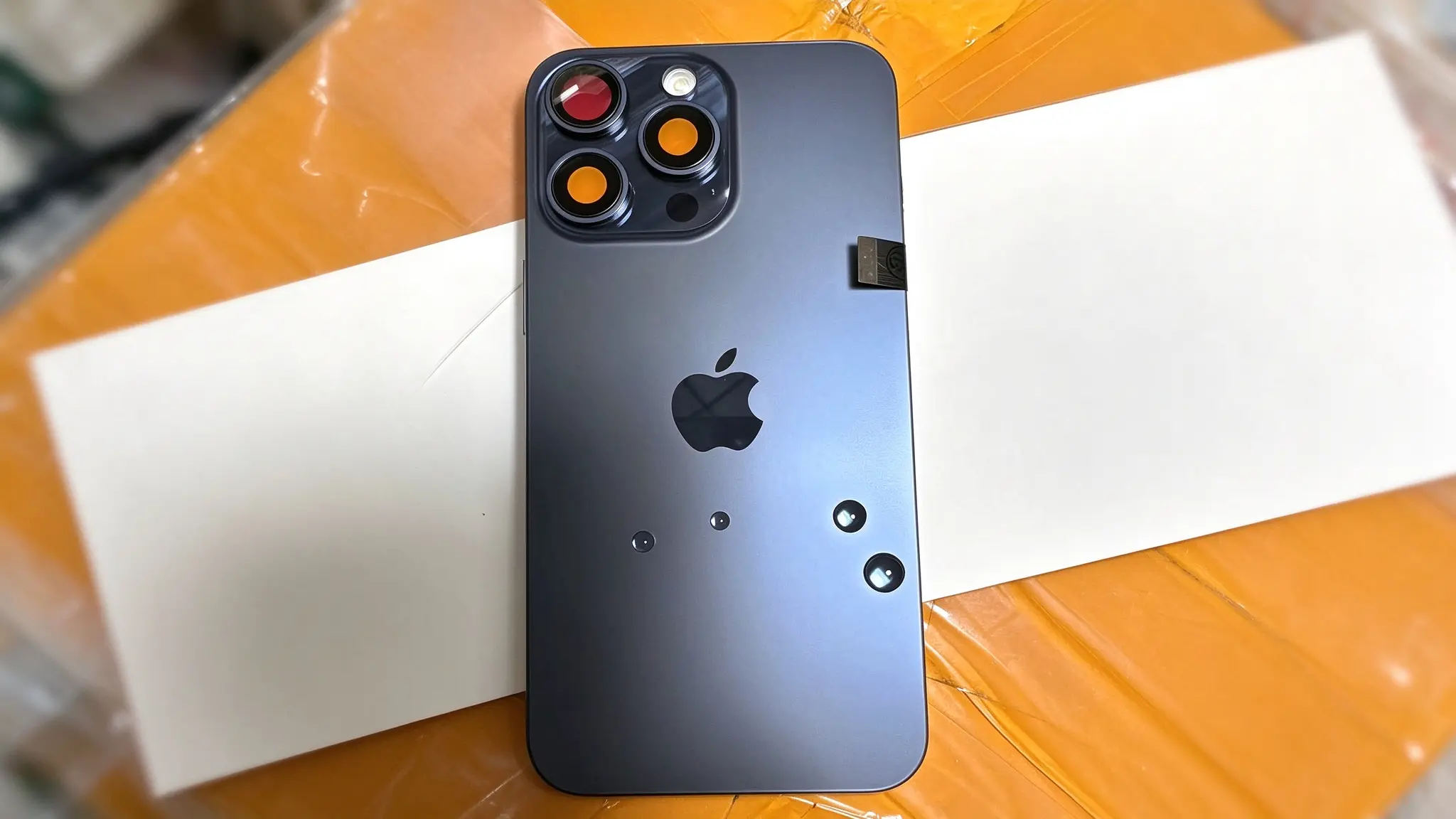
A tight, round water bead means the AF coating is intact. Flat spread means it's missing or worn.
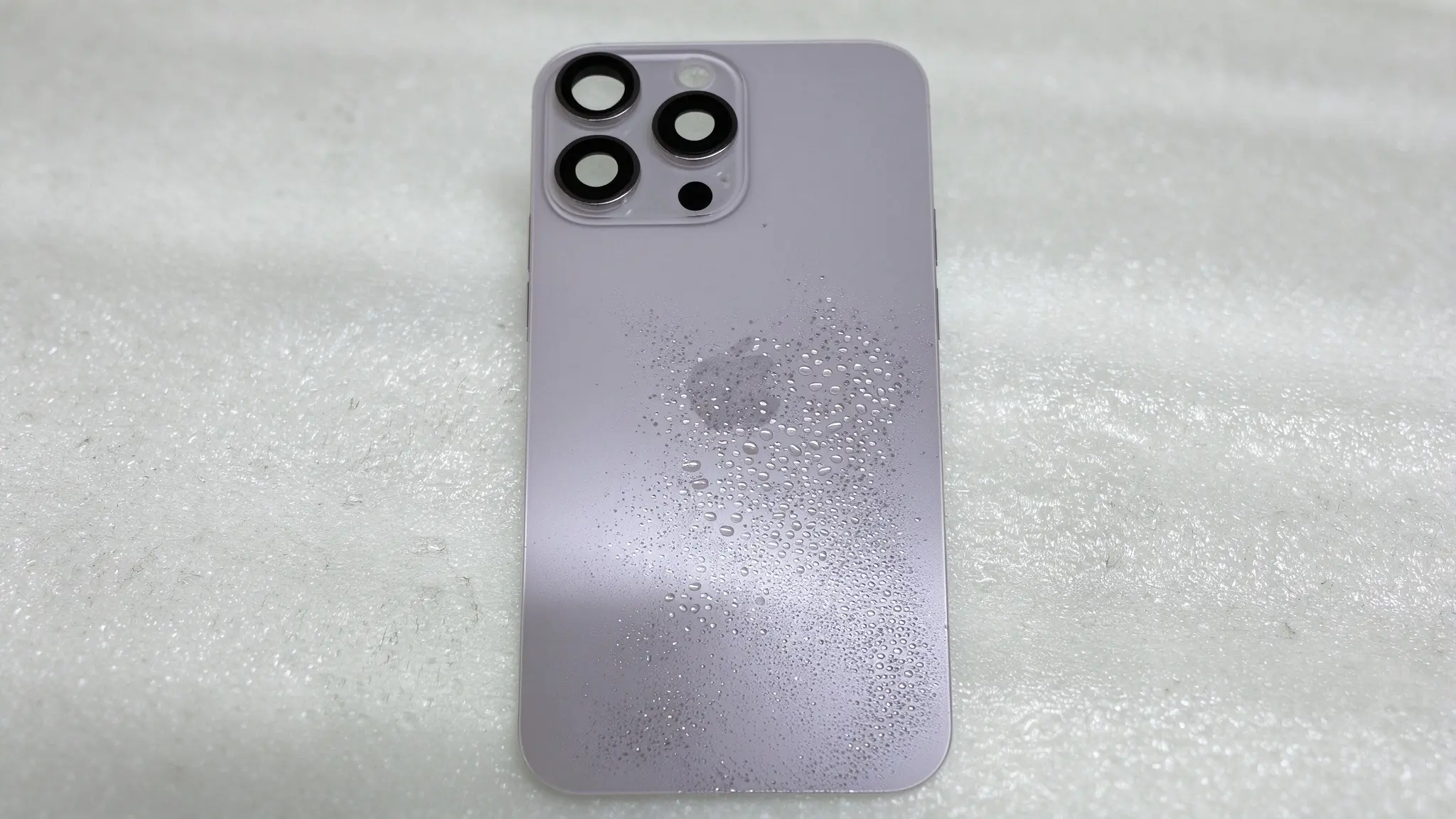
Spray test reveals coating consistency. Even beading across the panel means uniform coverage.
2. The Adhesive
Original pulled covers lose their adhesive during removal. When you buy, check whether you're getting bare glass (no adhesive) or re-taped glass. Bare glass requires the repair shop to apply their own adhesive — that takes skill. Re-taped glass depends on what tape was used: OEM-grade or generic double-sided tape. That determines whether the seal holds.
Aftermarket covers usually come with factory pre-applied adhesive. Good factories use 3M or equivalent. Cheap ones use generic double-sided tape. Bad adhesive means the cover lifts after a few days.
3. Frame and Camera Ring (Full Assemblies)
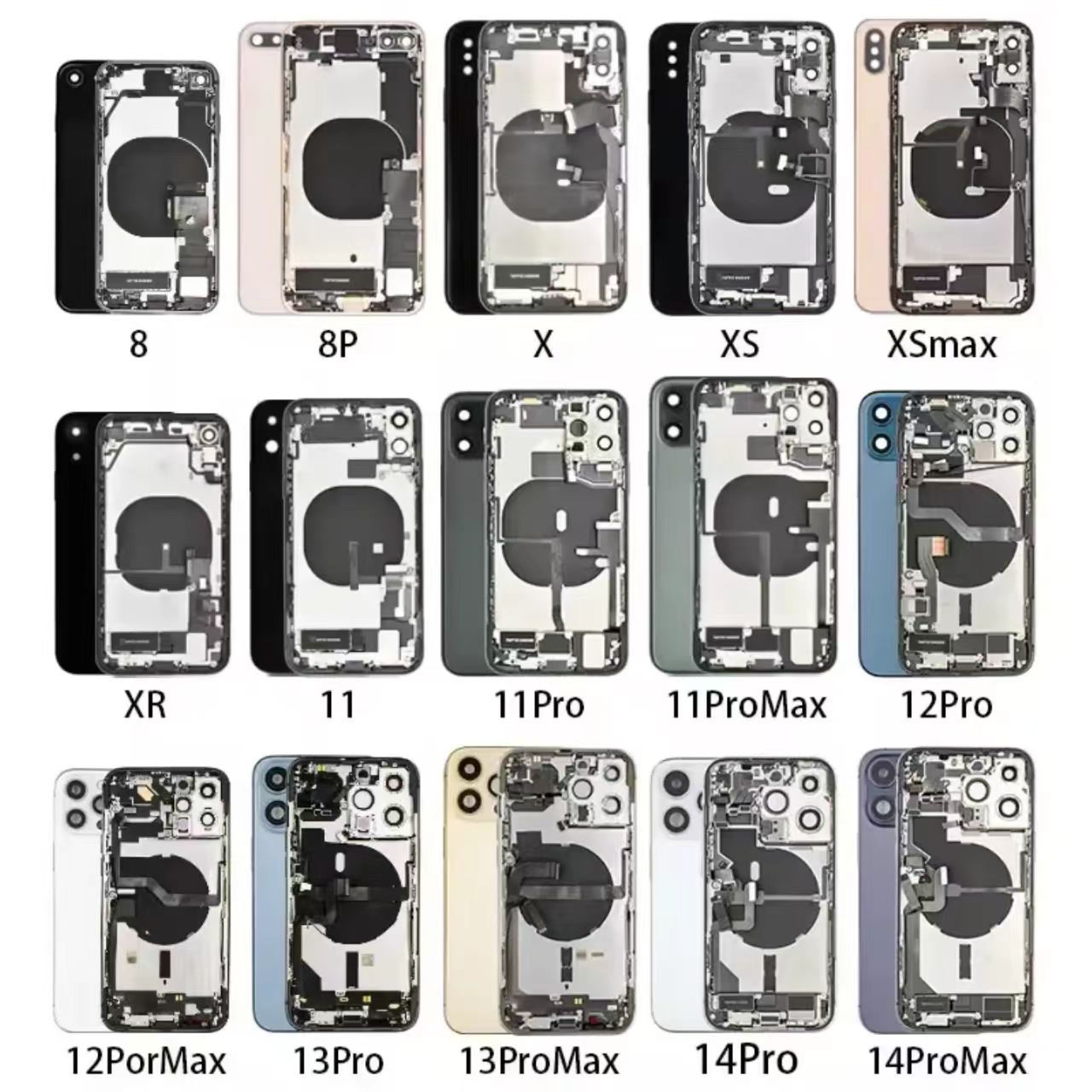
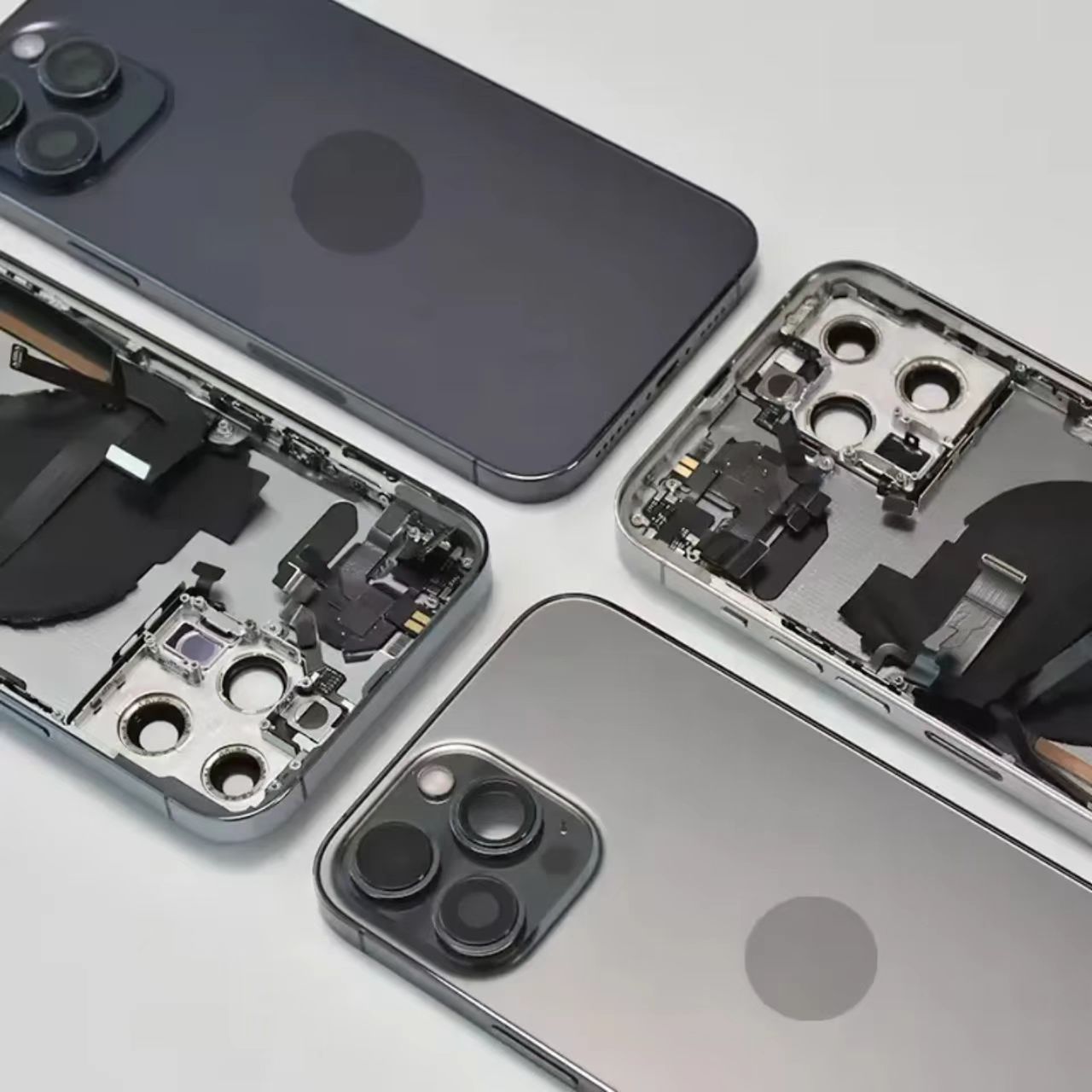
Original pulled assemblies use the Apple OEM aluminum frame and OEM camera ring. They seat perfectly and feel right.
Aftermarket frames are all over the place. Good ones use CNC aluminum. Cheap ones use die-cast aluminum or even plastic. Same with the camera ring — metal on good ones, plastic on bad ones. This is the biggest trap with aftermarket. It looks the same in photos. It feels completely different once installed. A repair tech knows within seconds.
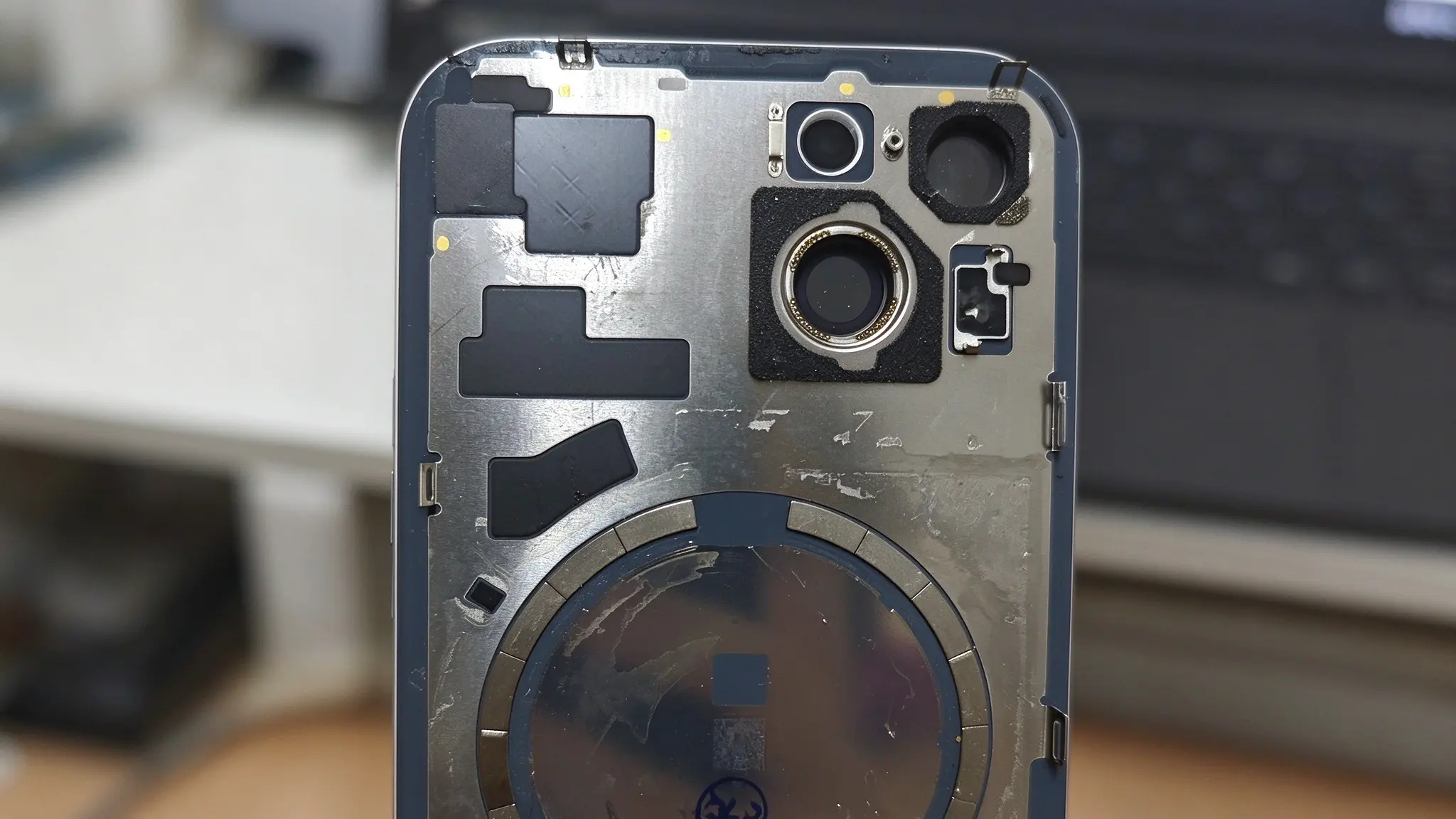
Solder joints are the hard tell on full assemblies. Clean, even joints mean proper equipment.
4. Color Match
Original pulled is factory color. It matches the phone it came off.
Aftermarket is factory-mixed. The same "Space Gray" from two different factories can look noticeably different — one bluer, one more purple. This is the top reason aftermarket covers get returned.
3. Quality Grades: What to Look For
Both types are graded in the wholesale market. You need to know the grading before you buy, and state it clearly when you sell.
Original Pulled Grades
| Grade | Standard | Best For |
|---|---|---|
| A (99% new) | No scratches, no chips, coating intact | High-end repair shops, refurbishers |
| B (95% new) | Light wear, hard to see without close inspection | General repair shops |
| C (90% new) | Visible scratches or edge chips, glass intact | Budget repairs, practice use |
Aftermarket Grades
| Grade | Standard | Best For |
|---|---|---|
| Premium | Strengthened glass + AF coating + 3M adhesive + CNC aluminum frame | High-end repair shops, refurbishers |
| Standard | Strengthened glass + standard adhesive + aluminum frame | General repair shops |
| Economy | Regular glass + generic tape + die-cast or plastic frame | Budget repairs, volume sales |
Important: every supplier defines "Grade A" or "Premium" differently. Ask for the specific standard before you buy. Don't go by the label alone.
4. Price Ranges
iPhone 14 Pro Max example:
| Type | Wholesale Price | Notes |
|---|---|---|
| Original pulled glass only (Grade A) | $2–$5 | Good condition, unstable supply |
| Original pulled full assembly (Grade A) | $15–$30 | OEM frame and camera ring |
| Aftermarket glass only (Premium) | $1–$2 | 100 pcs MOQ |
| Aftermarket glass only (Economy) | $0.40–$1 | Volume item |
| Aftermarket full assembly (Premium) | $5–$10 | CNC aluminum frame |
| Aftermarket full assembly (Economy) | $3–$5 | Die-cast or plastic frame |
Why the price gap:
- Original pulled is priced on OEM glass and factory color — limited supply drives the price up
- Aftermarket is priced on stable supply and low cost — but quality varies
- Original pulled full assemblies are the most expensive because frame and camera ring are OEM
5. Which iPhone Models Are Worth Stocking
Glass back covers aren't an iPhone 12 thing. Apple has used glass backs since the iPhone 8, and it continues through the iPhone 17. If you want to see what's in stock, browse our glass back cover wholesale collection.
Tier 1: Core Stock
iPhone 14, 14 Plus, and the entire 15 series (15 / 15 Plus / 15 Pro / 15 Pro Max)
The iPhone 14 and 14 Plus were the first models in years to move back to a rear-entry design, which dropped the official repair cost significantly. In China, third-party shops replace iPhone 14 back glass for around 429 RMB. Lower cost means customers actually repair, which means repair shops take the job, which means wholesale demand is steady. The 15 series pushed this further — the 15 Pro and Pro Max also use a more serviceable rear design.
Sourcing advice: these six models are safe to stock. Carry full color ranges — black, midnight, starlight, blue, green, pink, yellow.
We currently stock iPhone 15 series back covers and iPhone 16 series back covers, both eligible for the $300 mixed trial.
Tier 2: Moderate Stock
iPhone 12, 13 (standard), 16 (standard), 11, XR
The 12 and 13 still have huge installed bases, but repair economics are weaker. Third-party replacement runs 239–280 RMB, which is a lot to spend on a phone that's three or four years old. Some customers still do it — phones in good condition that they want to keep another year or two. That's steady long-tail demand.
The 11 and XR are the same story: large base, steady demand, lower ticket.
Sourcing advice: stock them, but not as your main line. Small quantities per color, just enough to keep them available. Black and white are the priority.
Check iPhone 12 series back covers and iPhone 13 series back covers. These pair well with phone batteries wholesale — repair shops usually need both.
Tier 3: Caution or Skip
iPhone 12/13 Pro series, 14 Pro / Pro Max, 16 Pro series, 17 series
The 12/13 Pro and 14 Pro models have terrible repair economics. Official back glass replacement runs 75,800–82,800 JPY in Japan and 3,998 RMB for the 14 Pro Max in China. Customers won't repair — they'll replace the phone or hide it in a case.
The 16 Pro and 17 are too new. Repair demand hasn't kicked in yet.
Sourcing advice: don't stock heavy. If a client asks, drop-ship or order small. Related models: iPhone 14 series back covers.
Also Worth Noting: iPhone 7 to X
Older models (iPhone 7 through X) have low ticket prices but massive installed bases. Good long-tail stock. See iPhone X to 7 series back covers.
6. How to Source
Original Pulled
Where: teardown suppliers, refurbishing factories, second-hand phone markets.
What to check:
- Look for pry marks or leftover adhesive on the glass edge — signs of rough removal
- Check the coating — drag a fingernail across it. OEM coating feels slick
- Compare color against a real phone
- On full assemblies, check the frame for bends and the camera ring for looseness
- Ask for the exact grading standard
Risk: unstable supply. Good-condition stock gets claimed fast. Condition varies between batches.
Aftermarket
Where: factories in Shenzhen and Dongguan.
What to check:
- Glass thickness and strength — measure with calipers against original pulled
- Water bead test — confirms AF coating
- Adhesive — peel back and check what tape is used
- Frame material — magnet test and feel test
- Color match — compare against a real phone, not supplier photos
- Camera hole alignment — test-fit against an OEM mid-frame
Risk: huge variation between factories. You need a stable supplier, not the cheapest quote.
7. How to Match Stock to Your Customers
Your buyers fall into two groups: repair shops and refurbishers.
For Repair Shops
- Shops with a laser separator: push original pulled glass only. They do their own separation and bonding, and they care most about OEM coating and color accuracy.
- Smaller shops without a laser: push aftermarket full assemblies. Peel and install, fast turnaround. But make sure the adhesive is good — bad tape means comebacks, and comebacks mean they don't reorder.
- High-end shops: push original pulled full assemblies. Their customers care about quality, not price.
For Refurbishers
- Push aftermarket. Refurbishers process phones in batches and need consistent condition.
- Carry full color ranges. Missing colors means lost orders.
- Keep pricing stable. Refurbishers work on batch margins — they can't quote against fluctuating costs.
Not sure which stock fits your customers? Start on our homepage to see the full catalog, or contact us for sample pricing.
8. $300 Mixed Trial — Test Quality Before You Reorder
If you're new to glass back covers, or you're not sure which grade fits your customers, here's how we work:
$300 minimum, mixed trial order.
Mix original pulled, aftermarket, different grades, different models — whatever adds up to $300. For example:
- A few original pulled Grade A glass-only covers to test the OEM coating
- A few aftermarket Premium full assemblies to test the CNC frame feel
- A few aftermarket Economy glass-only covers to test margin on volume
The point of a trial order isn't profit. It's to find out which grade works for your customers at the lowest possible risk.
Once you've tested, reorder what works. Reorders ship in full cartons at lower pricing and more stable lead times.
Why we do it this way:
Glass back cover quality doesn't translate through photos and spec sheets. "Premium aftermarket" from one factory is not the same as "Premium aftermarket" from another. You have to hold it, install it, and see how it holds up.
We're not built for one-off deals. The $300 mixed trial exists so you can test quality with minimal risk. What comes after — the reorders — is the real business.
9. Wholesale Buyer FAQ
Q: What is the minimum order for glass back cover wholesale?
A: We offer a $300 minimum mixed trial. You can mix original pulled and aftermarket, different grades, and different iPhone models in one order.
Q: What's the difference between original pulled and aftermarket glass back covers?
A: Original pulled uses Apple OEM glass removed from dead phones. Aftermarket is newly manufactured to iPhone specs. Original pulled has better color match and OEM coating; aftermarket has stable supply and lower pricing.
Q: Can I mix models and grades in one trial order?
A: Yes. That's the point of the $300 mixed trial — test different grades and models before committing to a larger reorder.
Q: How long does shipping take?
A: Trial orders typically ship within 3–5 business days. Reorders ship in full cartons with stable lead times. Contact us for current shipping estimates.
Q: Do you offer OEM or custom packaging?
A: Yes. We support OEM and ODM for bulk buyers. Contact our sales team with your requirements.
Contact Us for Today's Market Prices →
🔑 Ready to place your order?
We respond within 2 hours (Beijing time)
| 💬 WECHAT iPhoneparts2 |
📱 WHATSAPP +86 139 2379 4112 |
| 📧 EMAIL btradeec@163.com |
|
This guide was written by the MyTopCase sourcing team. We have been a China-based mobile accessories wholesale trader since 2012, serving retailers across the US and Europe. Learn more about us →