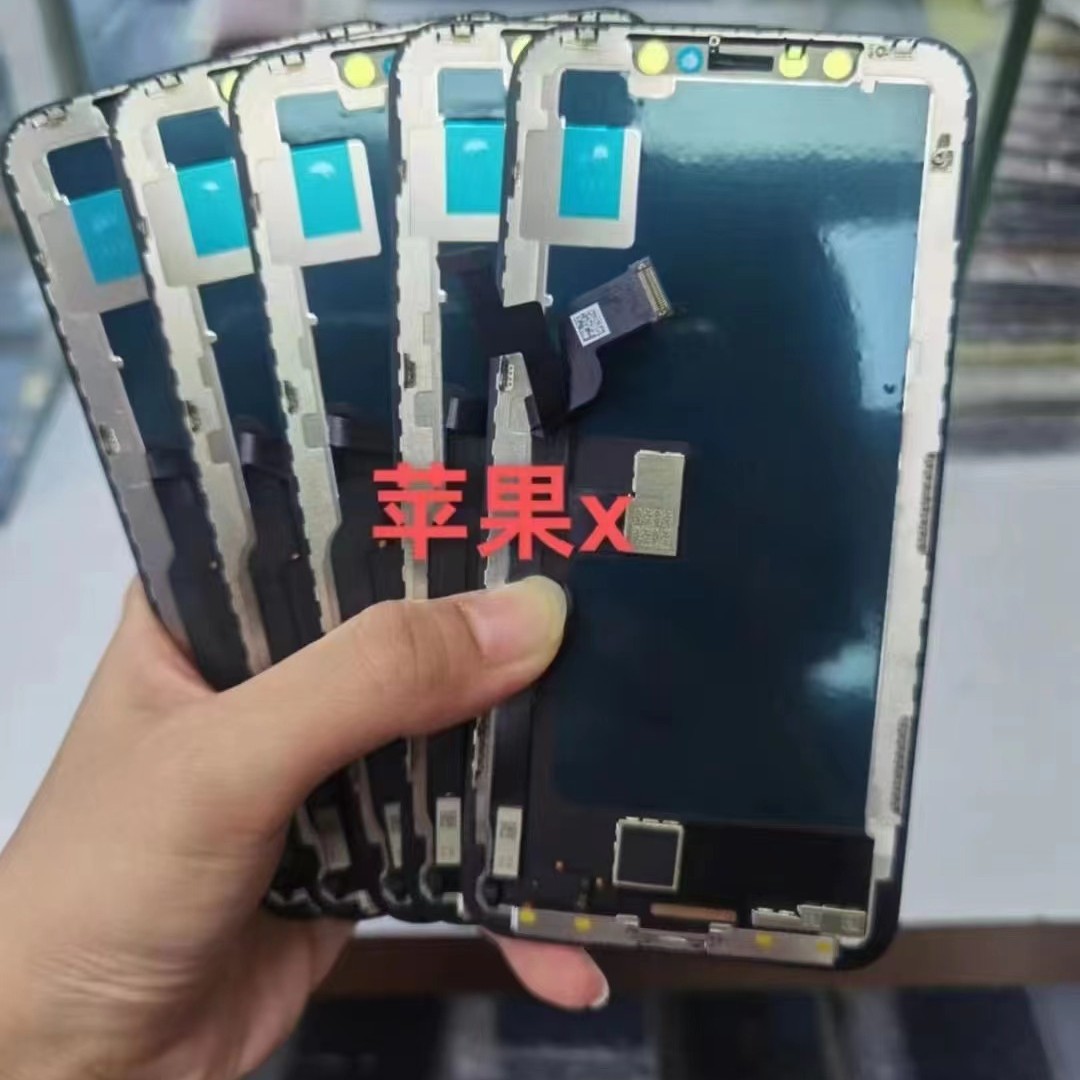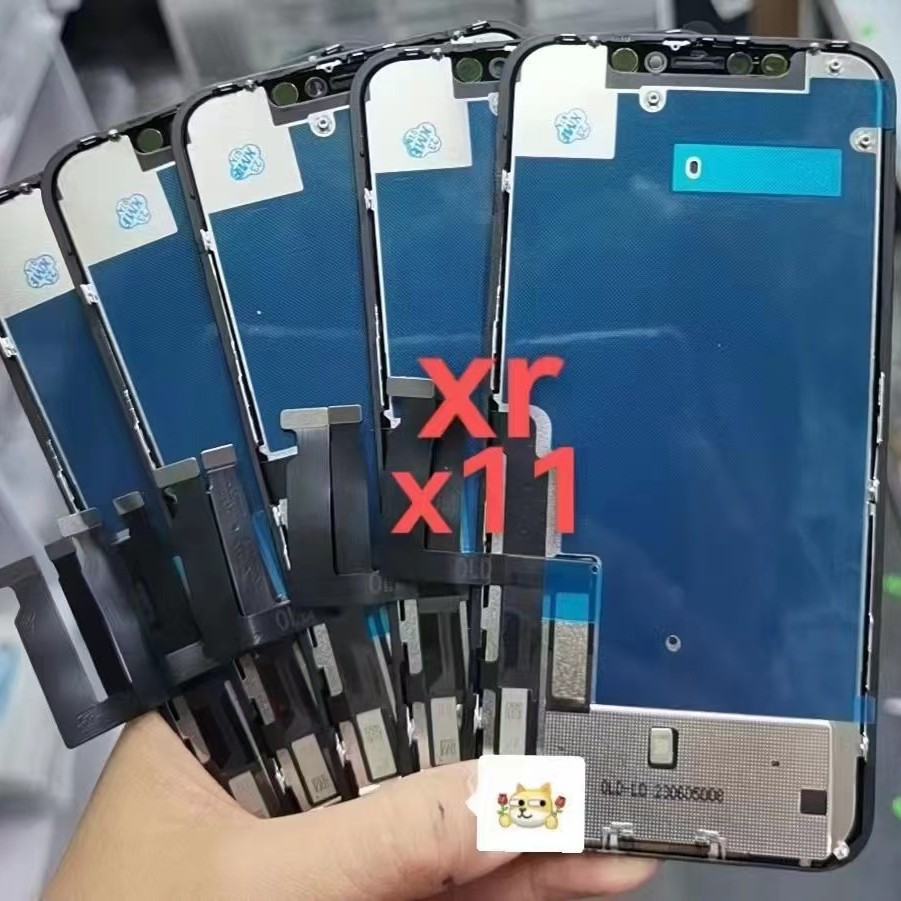
We have been in the mobile phone accessories wholesale business in Huaqiangbei, Shenzhen – China's largest electronics market – for 14 years. Every day, we handle large quantities of iPhone screen assemblies shipped to buyers worldwide. The following information is based on real market prices from Huaqiangbei as of September 2026, compiled for overseas purchasers. If you're in the phone repair business, this guide should save you from overpaying and making costly mistakes.
📑 Table of Contents
- 1. iPhone 16 Series Screen Specifications
- 2. The Four Grades of iPhone 16 Screens in Huaqiangbei
- 3. Price Comparison Table at a Glance
- 4. 3 Tips for Buyers
- 5. Summary
- 6. Sourcing Screens from Huaqiangbei?
1. iPhone 16 Series Screen Specifications
All four iPhone 16 models use OLED displays – there is no LCD option:
| Model | Screen Size | Technology | Refresh Rate |
|---|---|---|---|
| iPhone 16 | 6.1-inch | Soft OLED | 60Hz (fixed) |
| 16 Plus | 6.7-inch | Soft OLED | 60Hz (fixed) |
| 16 Pro | 6.3-inch | LTPO Soft OLED | 1-120Hz ProMotion |
| 16 Pro Max | 6.9-inch | LTPO Soft OLED | 1-120Hz ProMotion |
The Pro and Pro Max models feature LTPO adaptive high-refresh-rate displays, which cost significantly more to manufacture than the standard models. This hardware difference is the primary reason you'll see price variations in the wholesale market.
2. The Four Grades of iPhone 16 Screens in Huaqiangbei
Grade 1: Original Pulled Screens (OEM Pulls)
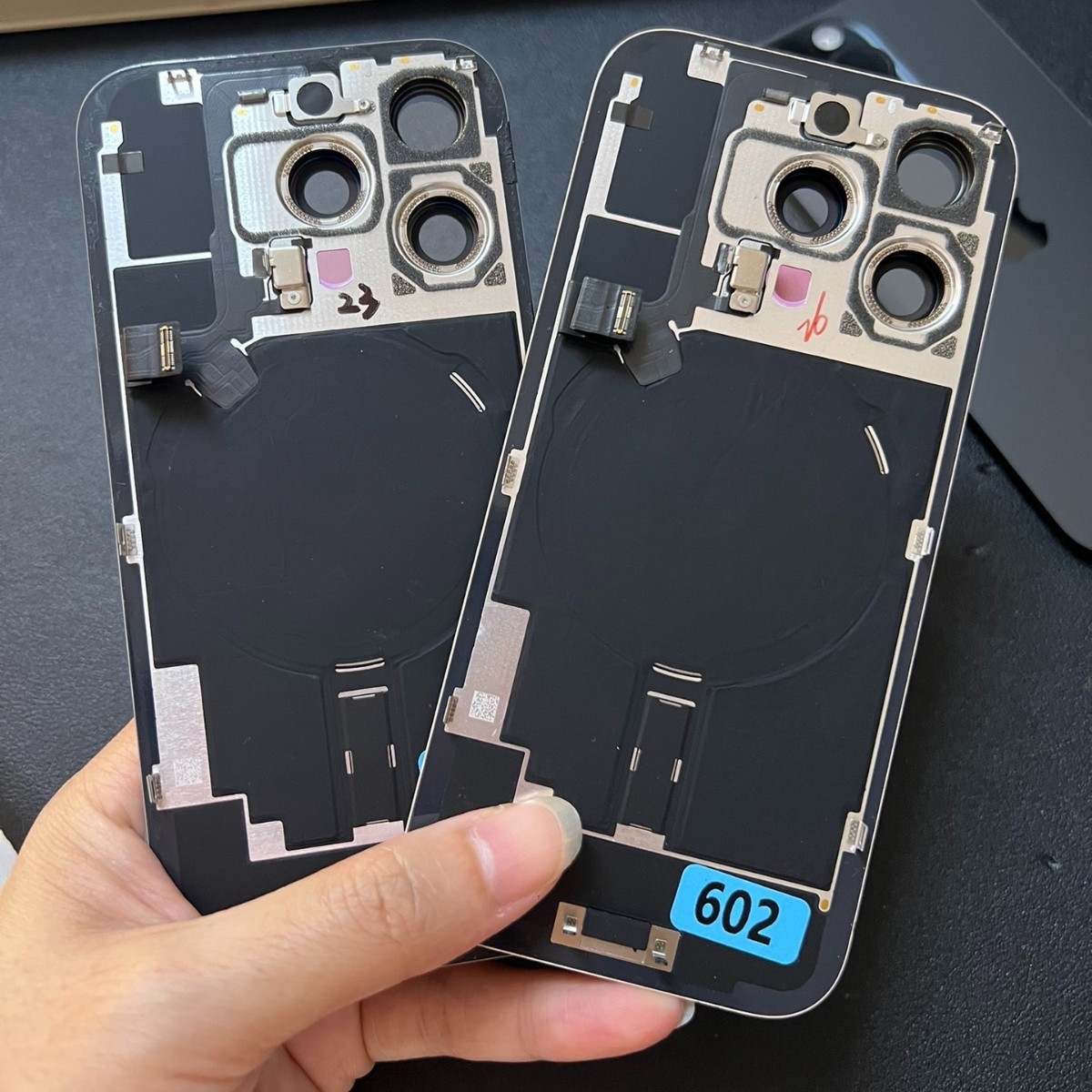
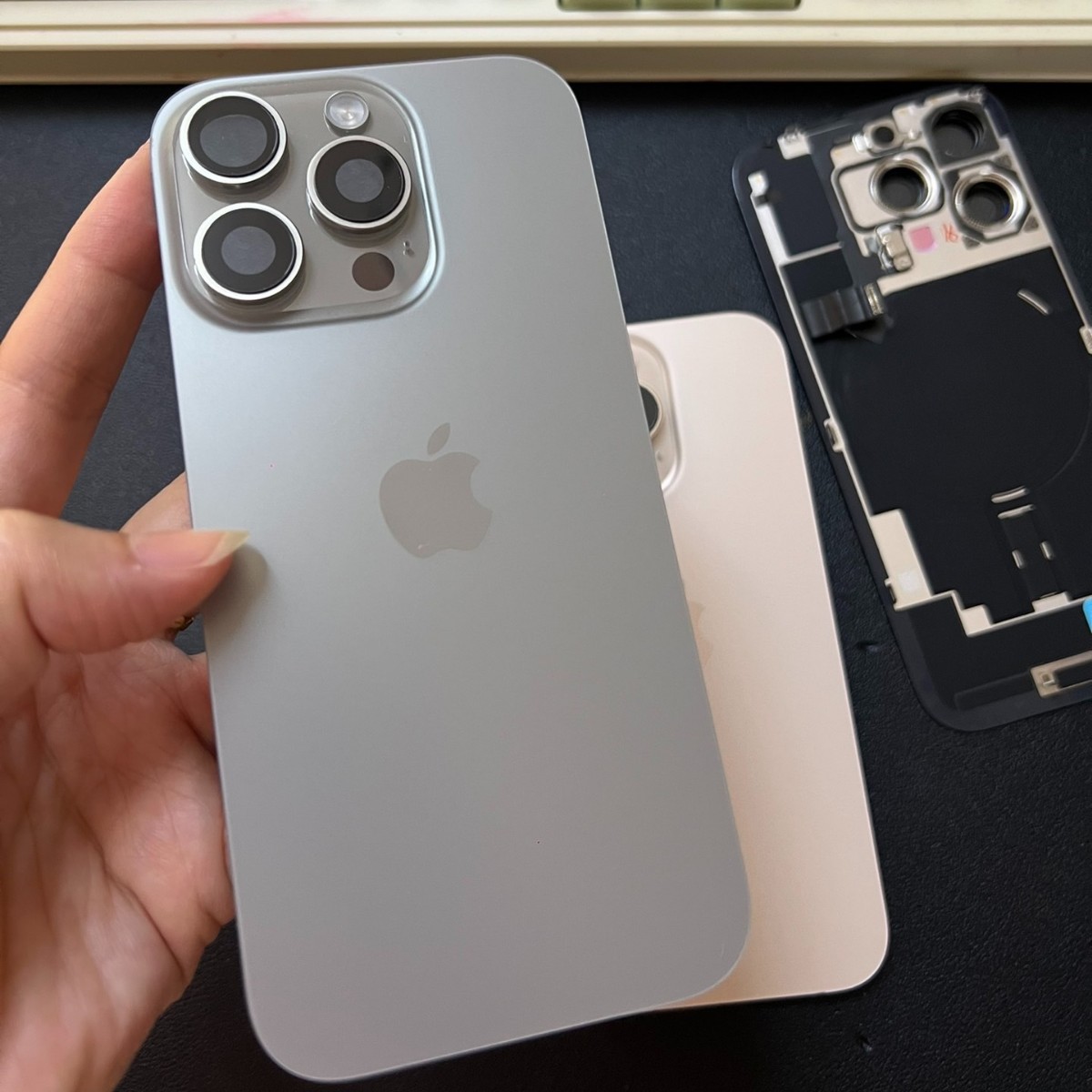
These are genuine Apple screens removed from new or like-new iPhones. The LCD, touch sensor, and cover glass are all original Apple parts.
Characteristics: Factory-original display quality, touch sensitivity, and color accuracy. Excellent light transmittance with a natural, vibrant finish.
Price Range: Approximately $80–120 USD/piece (wholesale, depending on condition and model). For context, Apple's official repair price ranges from $279–379 USD, so pulled OEM screens cost about one-third of Apple's pricing.
Best for: Repair shops that prioritize quality and serve high-end customers who demand the best.
Grade 2: Refurbished/Re-pressed Screens (Aftermarket Glass on OEM LCD)
These use the original OLED display panel, but the outer glass – which was cracked – has been replaced with aftermarket glass in a small workshop.
Characteristics: The display quality is close to original since the LCD panel itself is genuine. However, the re-pressing process often uses liquid UV glue or low-quality solid adhesives, which can cause color shift. The aftermarket glass is also more brittle and less shatter-resistant than the original.
Price Range: Approximately $40–70 USD/piece.
Best for: Buyers on a budget who still want decent original-grade display quality. Watch out – about 80% of what's advertised as "original screens" on the market are actually re-pressed or high-copy aftermarket assemblies. Verify carefully before purchasing.
Grade 3: Aftermarket Assemblies (Branded Chinese Screens)
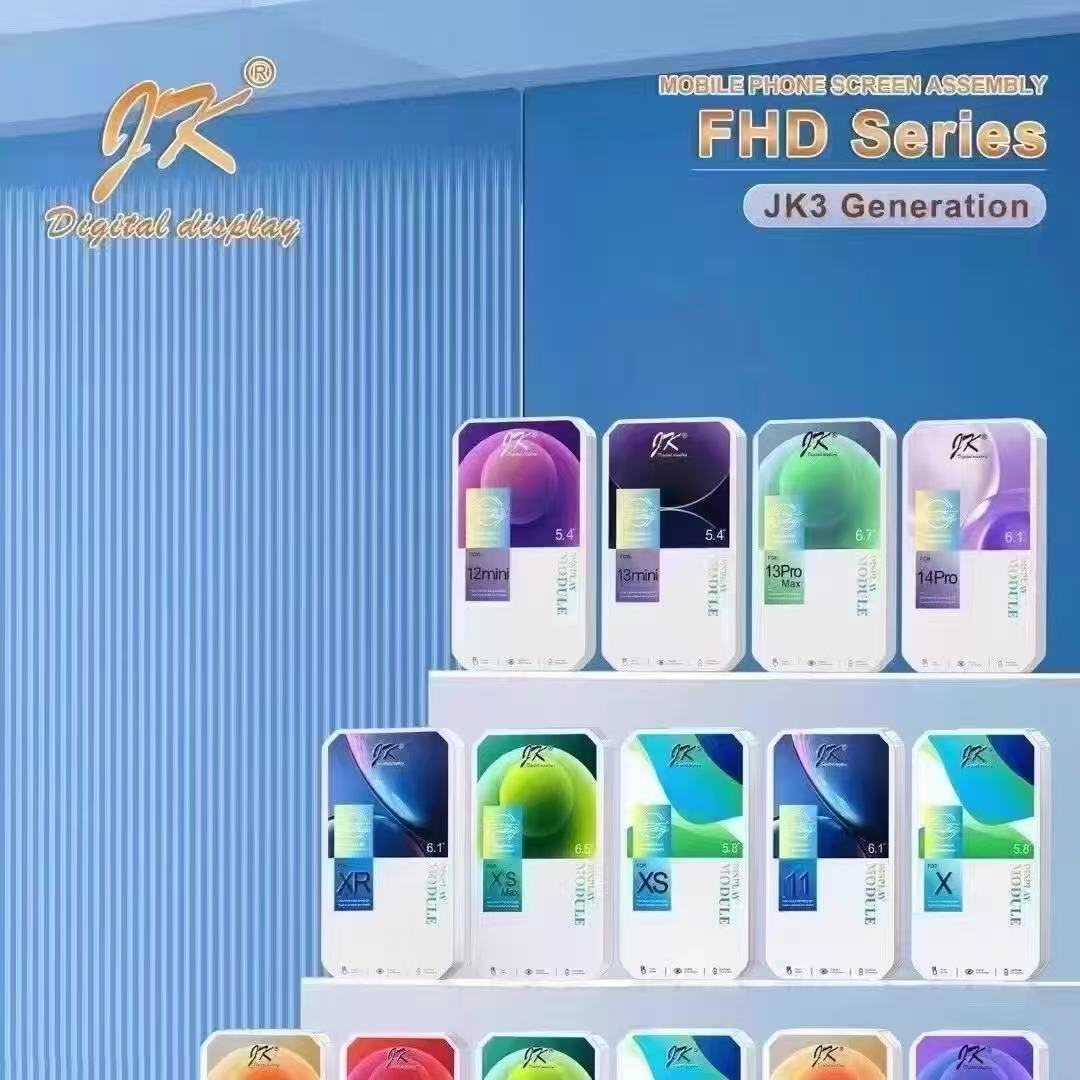
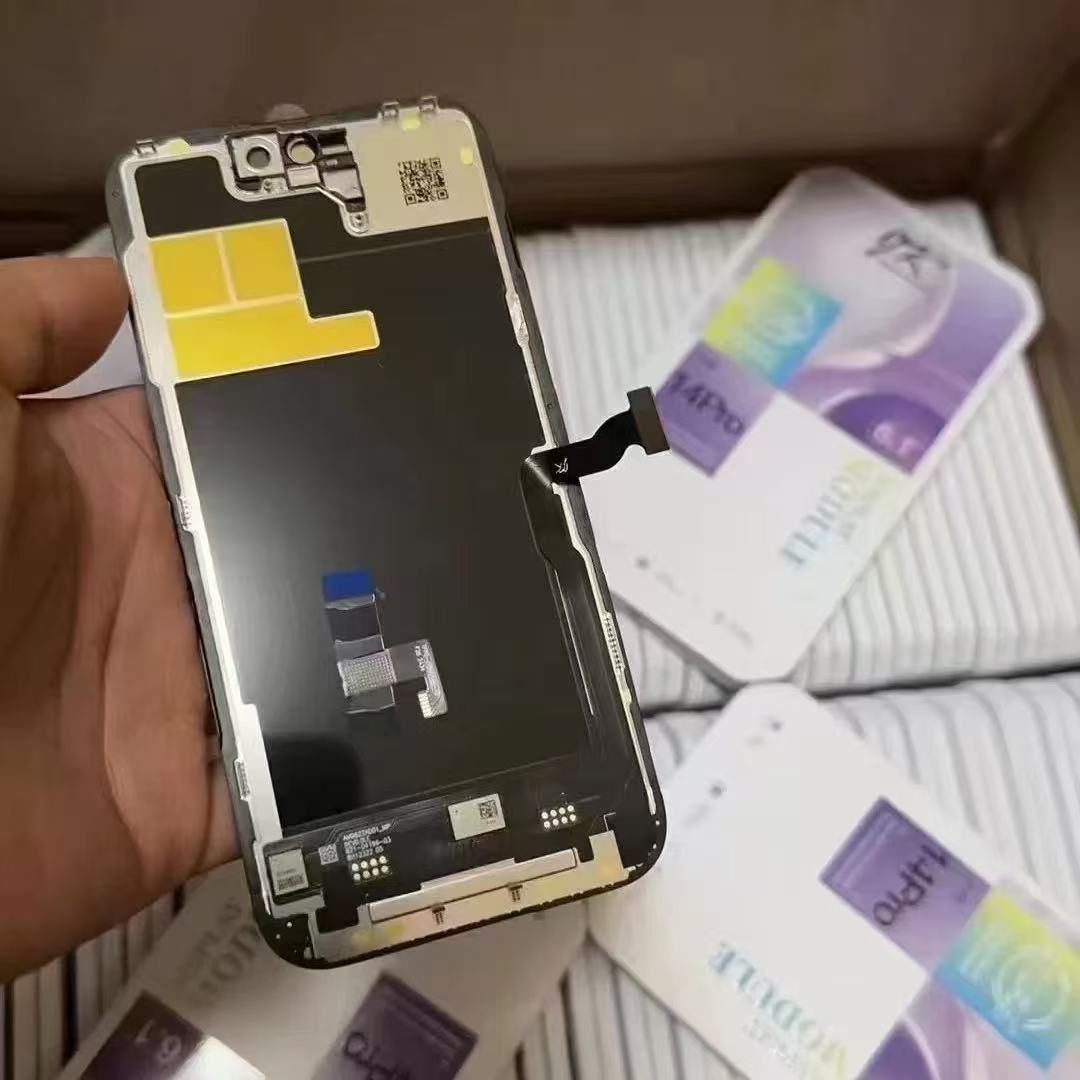
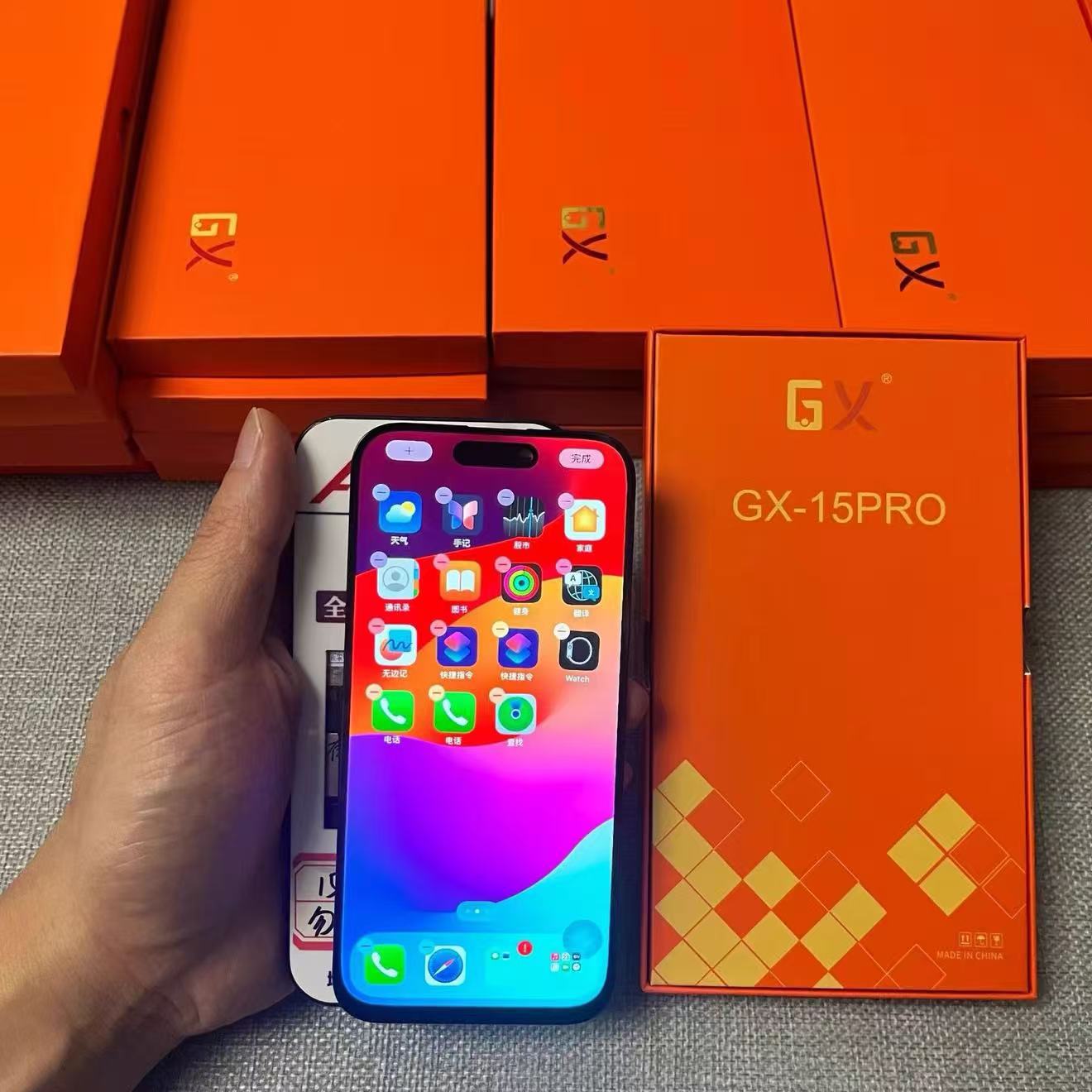
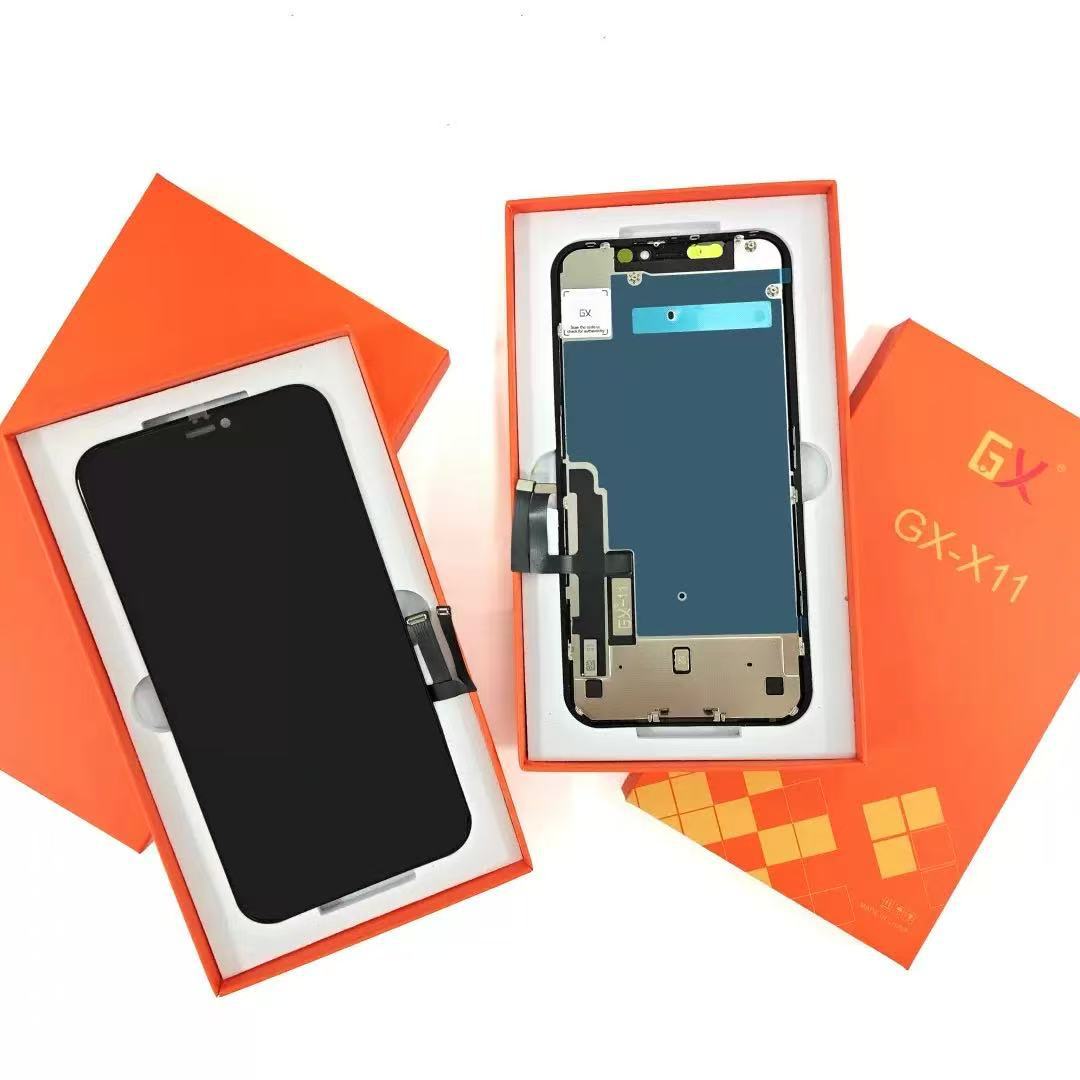
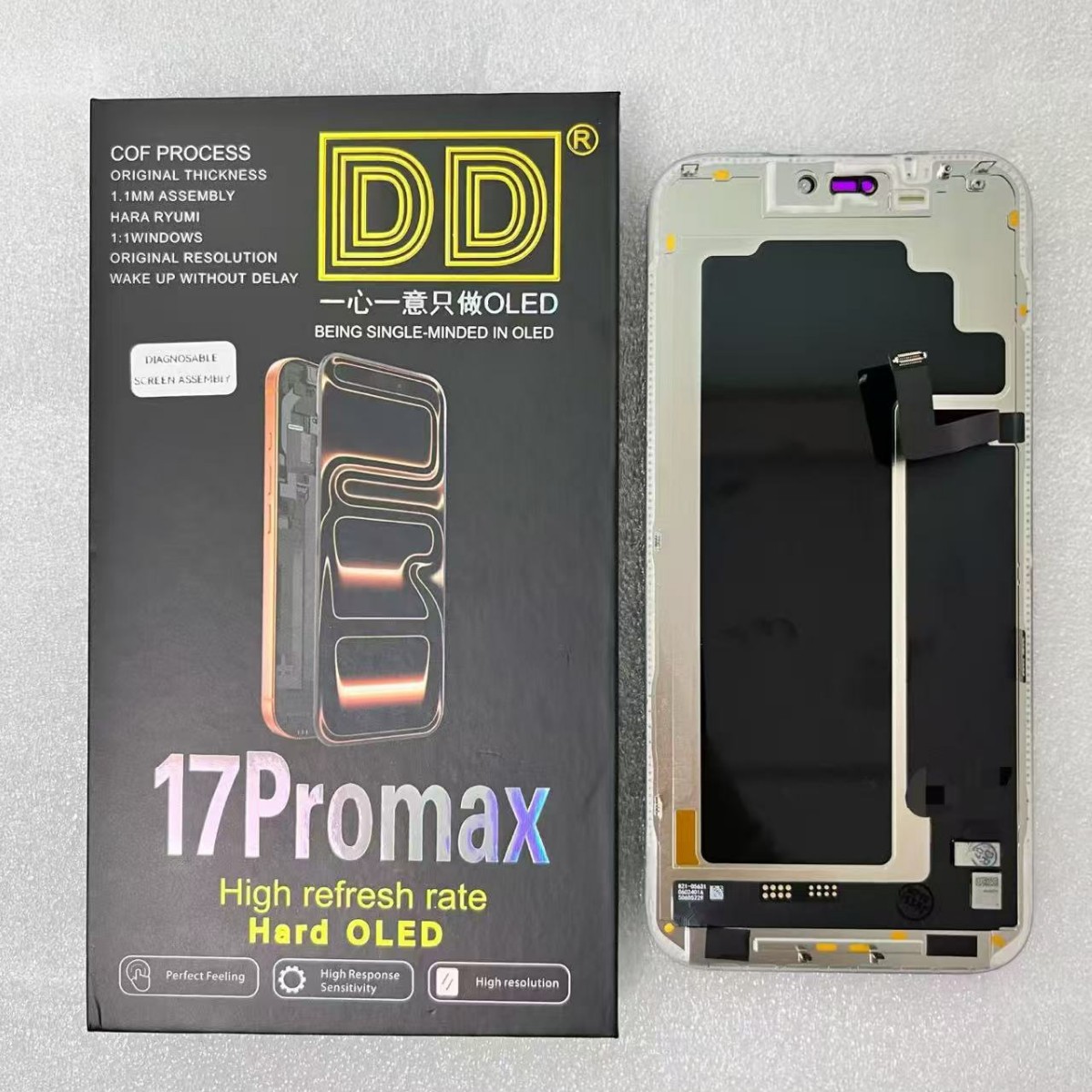
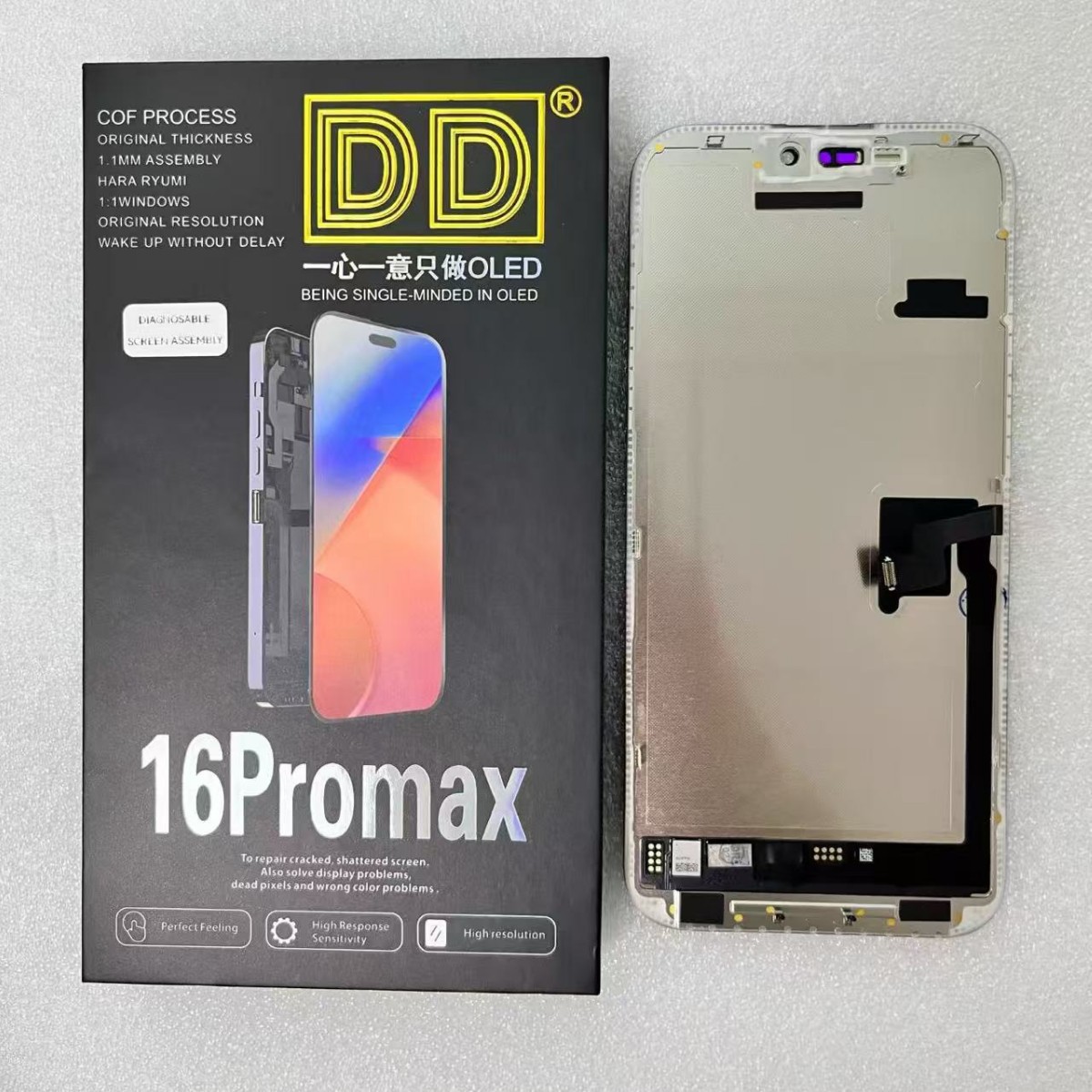
These are full-screen assemblies manufactured by Chinese display makers. Common brands in the Huaqiangbei market include GX, JK, DD, RJ, TC, and ZY.
Characteristics: Affordable and cost-effective. If these screens survive the first two weeks without issues, they tend to remain reliable long-term. However, light transmittance, color reproduction, and touch sensitivity are noticeably inferior to original Apple screens.
Price Range: Approximately $18–50 USD/piece, depending on the brand and build quality (rigid OLED vs flexible OLED). For example, a JK-brand 16 Pro Max flexible OLED assembly wholesales for around HK$403.97, while a DD-brand 16 flexible OLED goes for approximately HK$363.30.
Best for: High-volume wholesalers with tight cost controls, or repair shops handling mid-to-low-tier devices where customers prioritize price over perfection.
Grade 4: Frosted/Matte Finish Screens (Niche Category)
A newer category that has emerged in recent years. These screens feature a micro-frosted surface treatment that reduces glare and reflection.
Characteristics: Ideal for outdoor or bright-environment use. Over 95% of users report significantly less eye strain after 3 hours of continuous use compared to standard glossy screens. Color and touch performance are close to original-grade levels.
Price Range: Approximately $11–23 USD/piece.
Best for: Shops looking to differentiate themselves by offering an "eye-care" screen option to customers.
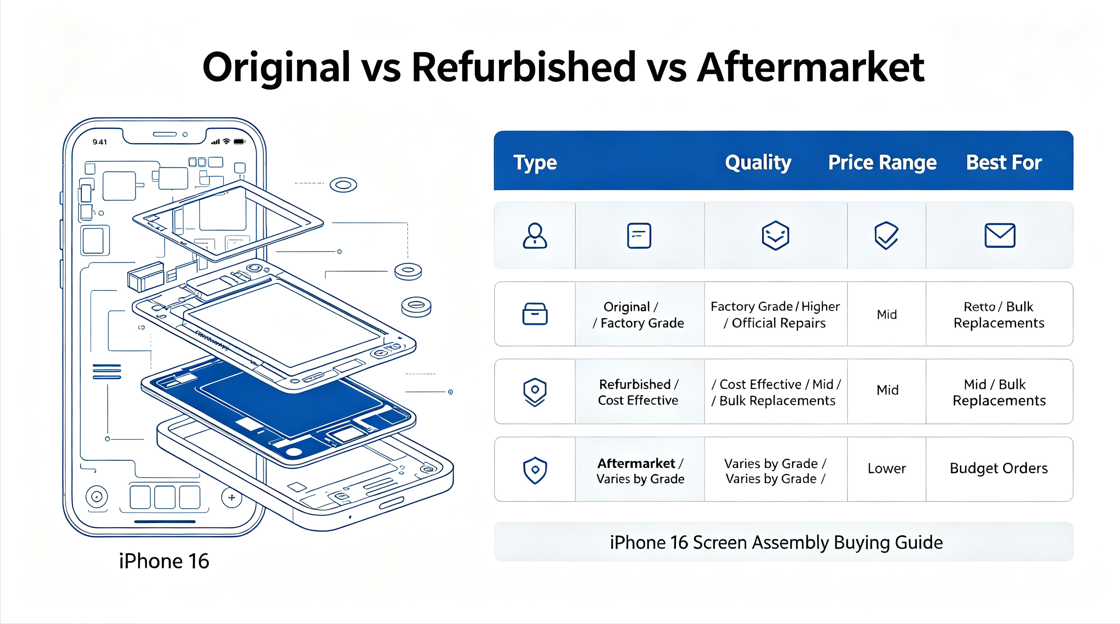
3. Price Comparison Table at a Glance
| Screen Type | Wholesale Price (USD/piece) | Key Advantage | Key Disadvantage |
|---|---|---|---|
| Original Pulled (OEM) | $80–120 | Factory-original quality, best display | Highest price, inconsistent supply |
| Refurbished/Re-pressed | $40–70 | OEM panel, moderate price | Fragile outer glass, possible color shift |
| Aftermarket (Branded) | $18–50 | Affordable, stable supply | Noticeably lower display/touch quality |
| Frosted/Matte | $11–23 | Glare-free, eye-friendly | Non-original, niche appeal |
Note: All prices are wholesale reference rates from the Huaqiangbei market as of September 2026. Actual prices fluctuate with supply and demand. Pulled OEM screen prices are heavily influenced by recycling volumes, while aftermarket screen prices tend to be more stable.
4. 3 Tips for Buyers
Tip 1: Don't Just Look at the Price – Ask What You're Actually Getting
The same booth might quote you prices that vary by 3x. Always follow up with: "Is this original pulled, refurbished/re-pressed, or aftermarket?" Don't be shy – it's your right to know what you're paying for.
Tip 2: Inspect Pulled OEM Screens Before Committing
Pulled OEM screens come in different grades:
- Small-scratched (Minor): Light scratches, fully functional.
- Mint (Excellent): Nearly flawless, like-new condition.
- New/Open-box: Pristine, unused condition.
Prices can differ by $30–50 USD between grades. For bulk purchases, insist on inspecting each piece – check for dead pixels, bright spots, and touch responsiveness – before you pay.
Tip 3: Choose Reputable Aftermarket Brands
GX, JK, DD, RJ, TC, and ZY are all well-known names in the Huaqiangbei market. Each brand has a slightly different positioning and quality tier. Order samples first – test them with real-world use before committing to large quantities. Find the brand that best matches your customers' expectations and your price point.
5. Summary
The price differences in iPhone 16 screen assemblies come down to three core variables:
- Panel Origin (OEM pulled vs Chinese aftermarket)
- Repair History (unmodified vs re-pressed glass)
- Build Technology (rigid OLED vs flexible OLED vs LTPO)
Your choice depends on your customer base:
| Your Customer Type | Recommended Screen Grade |
|---|---|
| High-end repair, brand reputation matters | Original Pulled (OEM) |
| Mid-tier repairs, cost-conscious customers | Refurbished/Re-pressed or Branded Aftermarket |
| High-volume wholesale, channel distribution | Branded Aftermarket (GX/JK/DD etc.) |
6. Sourcing Screens from Huaqiangbei?
We have been sourcing, inspecting, and shipping from Huaqiangbei for 14 years. Our daily work is walking the markets, picking the best batches, and making sure what we ship meets our quality standards.
If you're looking to purchase iPhone 16 screen assemblies in bulk, we offer:
- Real-time daily market quotes (OEM pulled / refurbished / aftermarket – all grades)
- Piece-by-piece inspection with photos/videos before shipment (you confirm, we pack)
- International logistics to your doorstep, anywhere in the world
Browse our screen category page for current inventory and prices
Contact our support team for today's Huaqiangbei wholesale prices
📦 Ready to place your order?
We respond within 2 hours (Beijing time)