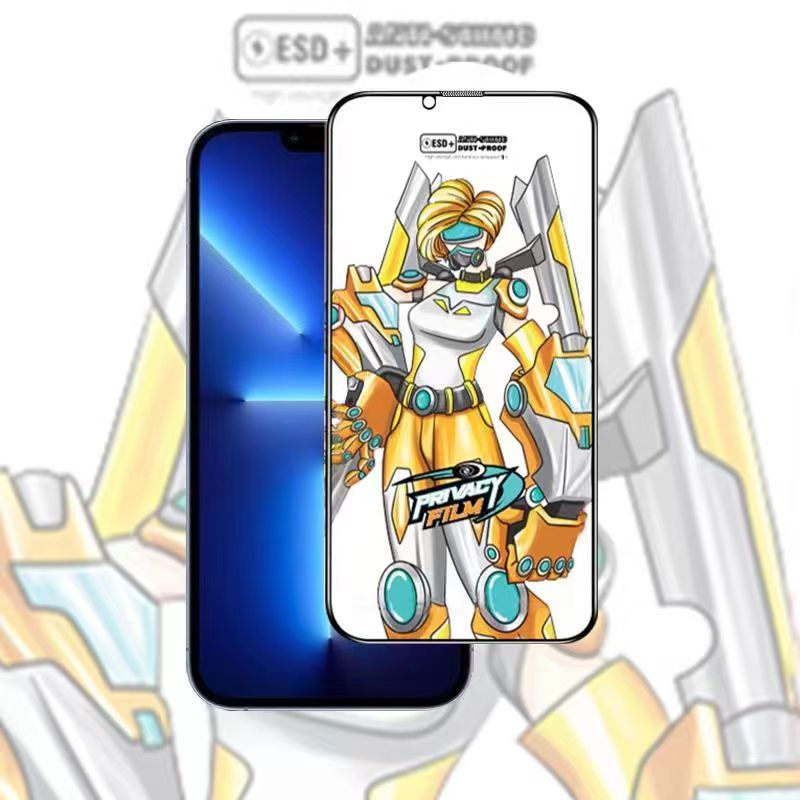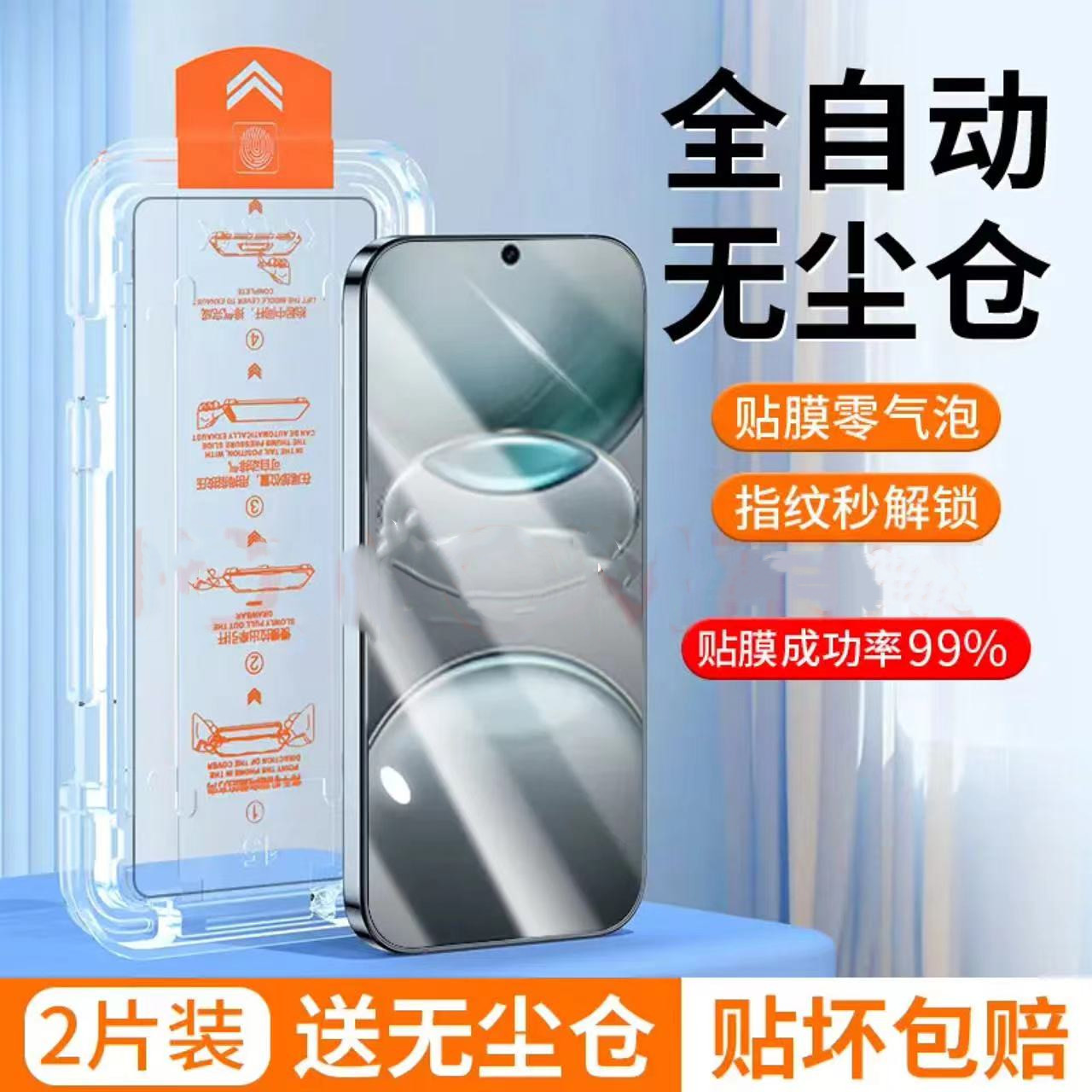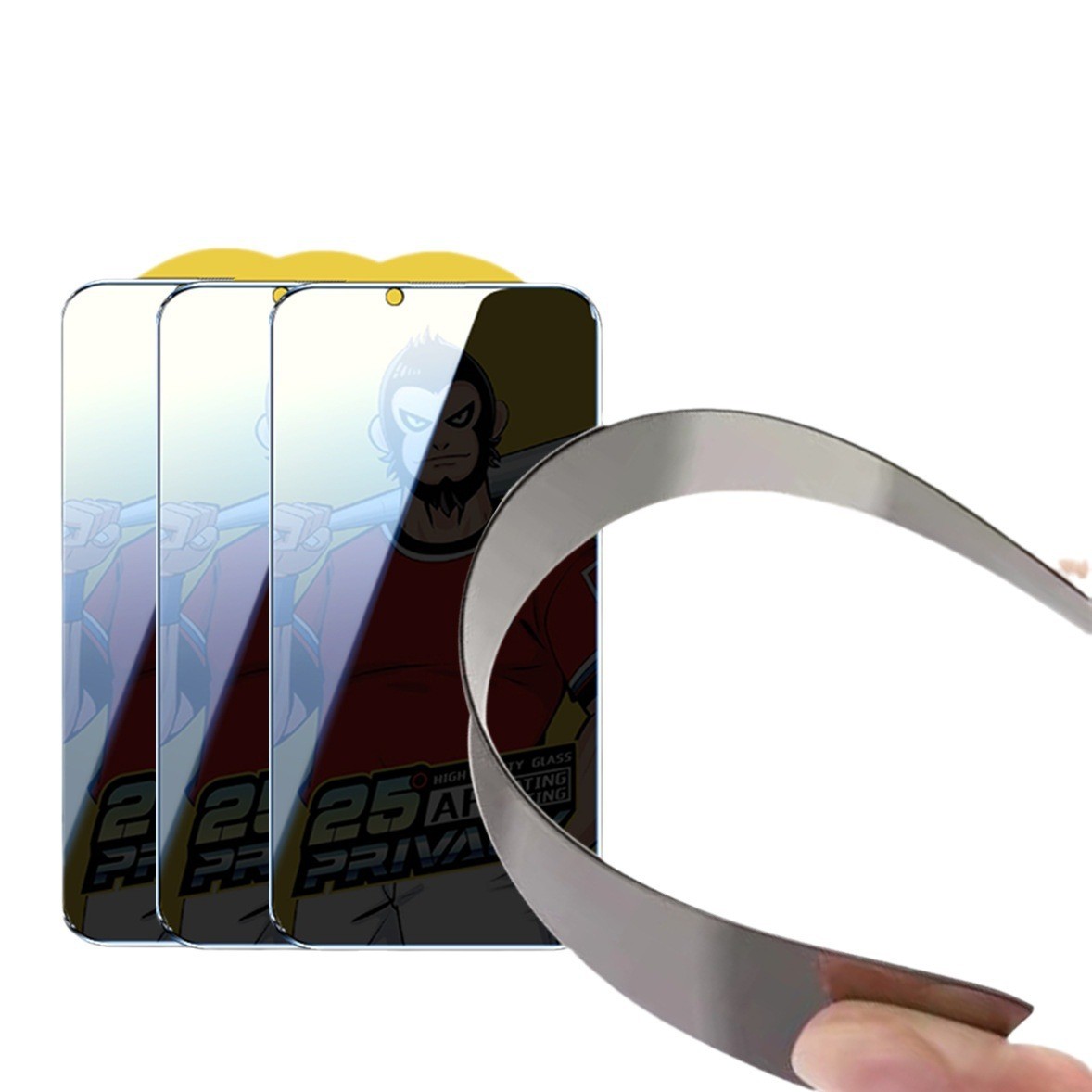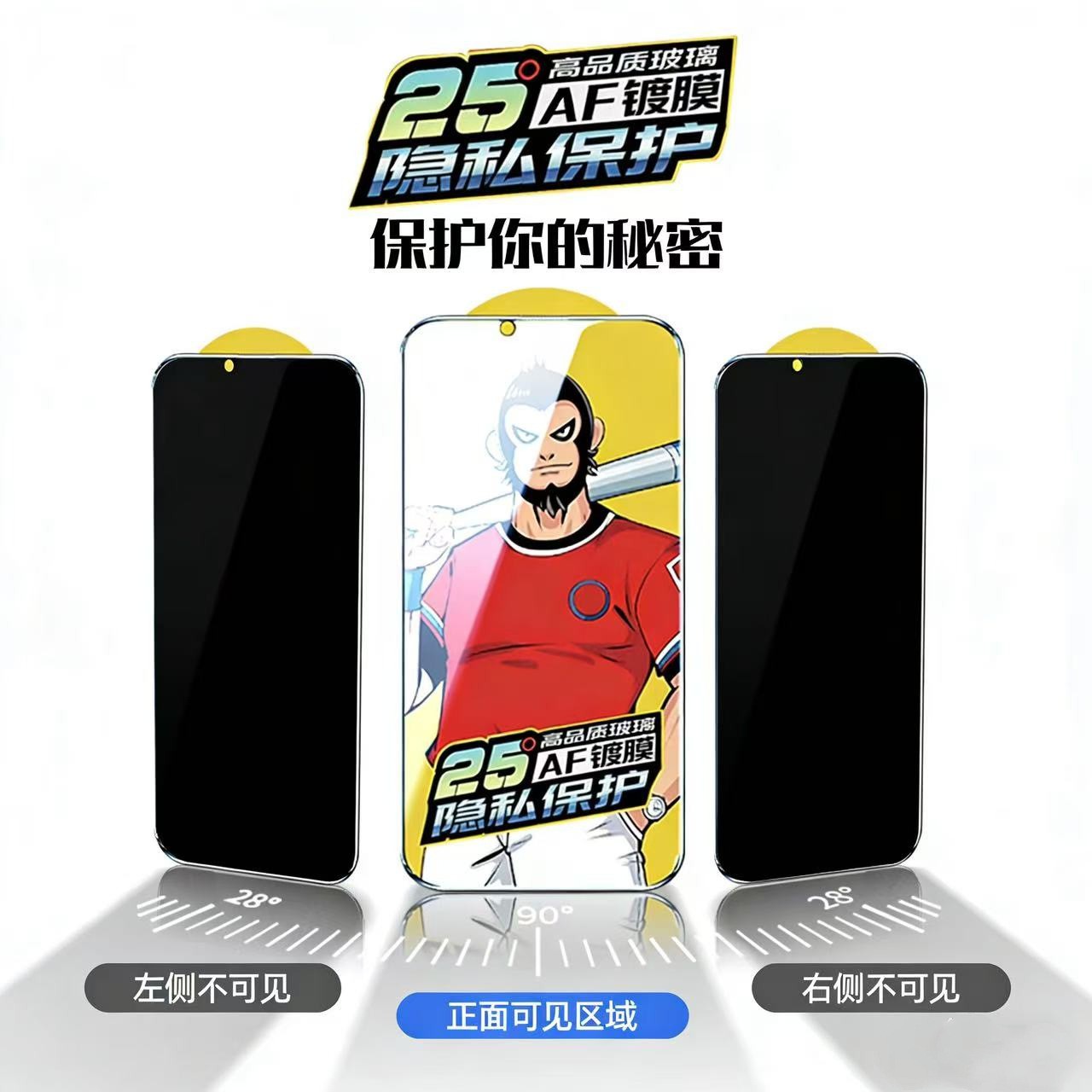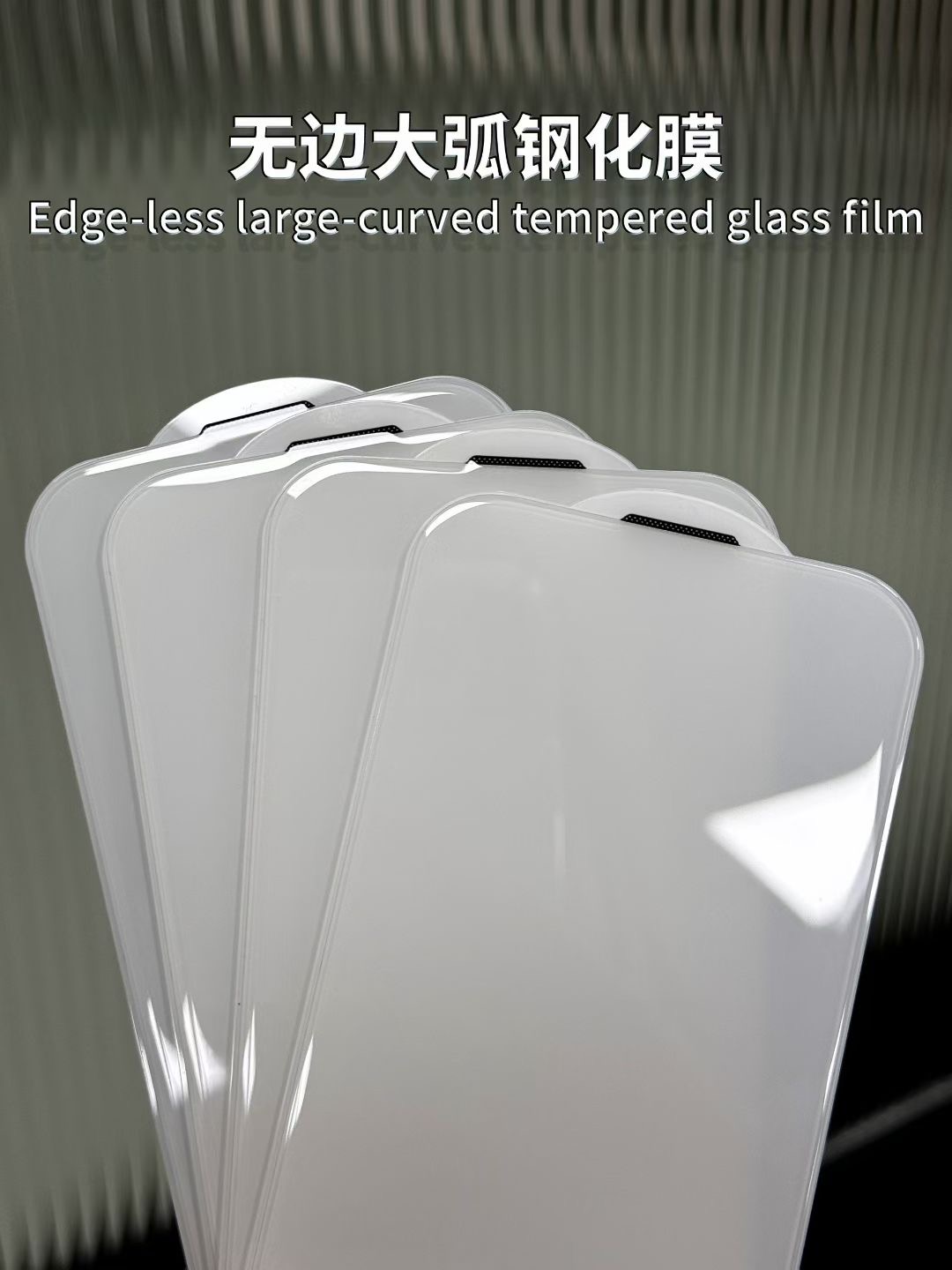
If you run a phone accessory brand, an independent online store, or a regional distribution business, you're probably looking for answers to three questions:
- Where can I source tempered glass screen protectors at wholesale prices?
- What's the bulk pricing for iPhone 17 / 18 Pro Max screen protectors?
- I want to build my own brand — can I customize the backboard with an MOQ of just 1,000 units?
This guide answers all three. It follows your buying journey: the basics of the category, what to watch for with new phone models, then a deep dive into private label customization and our 1,000-unit custom backboard program, and finally how to separate good glass from bad.
📋 Table of Contents
- 1. The Basics of Wholesale Tempered Glass Screen Protectors
- 2. iPhone 17 / 18 Pro Max Tempered Glass: What to Watch For
- 3. Private Label Customization: Your Own Backboard from 1,000 Units
- 4. The Cost and Profit of Private Label: Why It's Worth It
- 5. Private Label vs. OEM: Which Fits Your Brand Stage?
- 6. How to Tell Good Tempered Glass from Bad: 5 Core Metrics
- 7. Packaging Customization: Your Brand's First Impression
- 8. How to Choose a Tempered Glass Supplier: 6 Questions That Matter
- 9. From Sampling to Shipping: The Full Timeline
- 10. Who This Is For — And Who It Isn't
- 11. Why mytopcase.com Is the Right Brand Partner
- FAQ: Private Label Tempered Glass Wholesale
1. The Basics of Wholesale Tempered Glass Screen Protectors
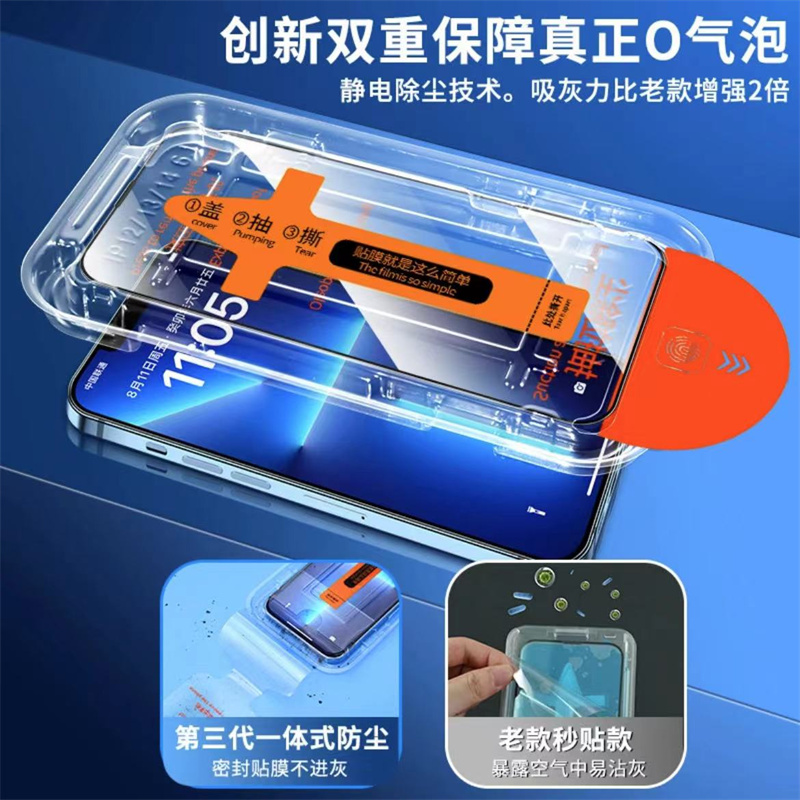
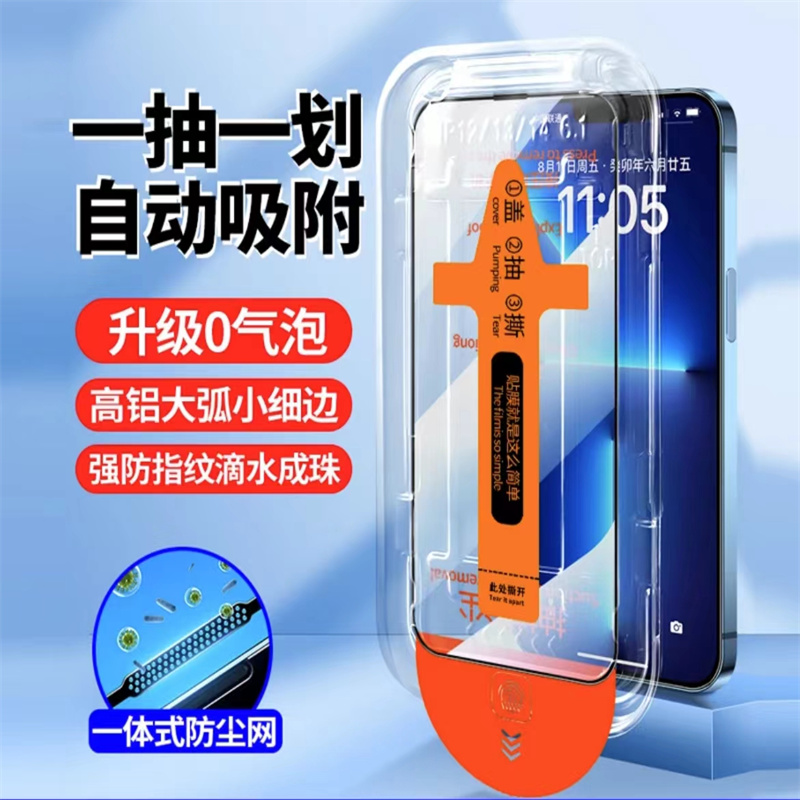
Tempered glass screen protectors are one of the most stable consumables in the mobile accessory market. The more expensive the phone, the higher the cost of screen repair — and the more essential the protector becomes.
For brand-owned phone shops, independent online sellers, and regional distributors, tempered glass offers several advantages:
- Low unit price, high repurchase rate. Customers replace them when they crack, when they upgrade their phone, or when the oleophobic coating wears off.
- Broad distribution channels. Physical stores, independent websites, social commerce, and repair shops all sell them.
- Huge model range. New phones launch, old models stay in circulation — there's always demand for more SKUs.
- Brand-friendly. Backboards, retail packaging, and master cartons can all be customized.
👉 Browse our full tempered glass collection: Wholesale Tempered Glass Screen Protectors →
2. iPhone 17 / 18 Pro Max Tempered Glass: What to Watch For
The 6–12 months after a new phone launch is the golden window for model-specific tempered glass wholesale.
Key considerations for new model sourcing:
- Are the molds updated? The screen size, camera cutout, and edge curvature of the iPhone 17 / 18 Pro Max may have changed. Always confirm your supplier is using the latest cutting dies.
- Can they send samples? A reliable supplier will produce samples quickly after launch.
- Is the MOQ flexible? New model inventory carries higher risk. Suppliers who accept small trial orders are more accommodating.
- Is the lead time stable? The hype window for a new phone is short. A delayed shipment means missing the sales season.
👉 Related products: iPhone 17 Series Tempered Glass → | iPhone 18 Pro Max Tempered Glass →
3. Private Label Customization: Your Own Backboard from 1,000 Units
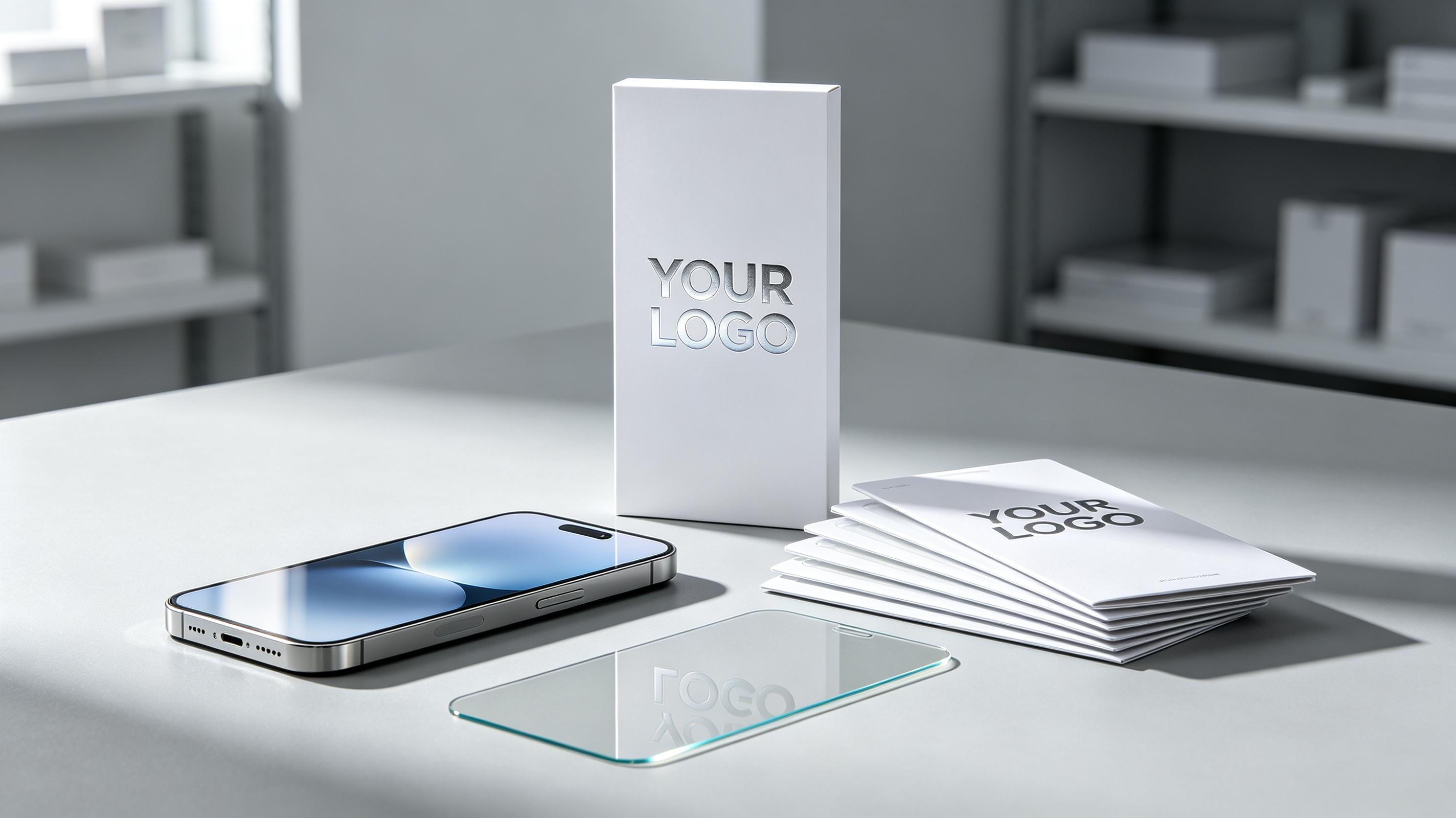
This is what separates you from the generic sellers.
From just 1,000 units per model, you can customize the backboard with your own branding.
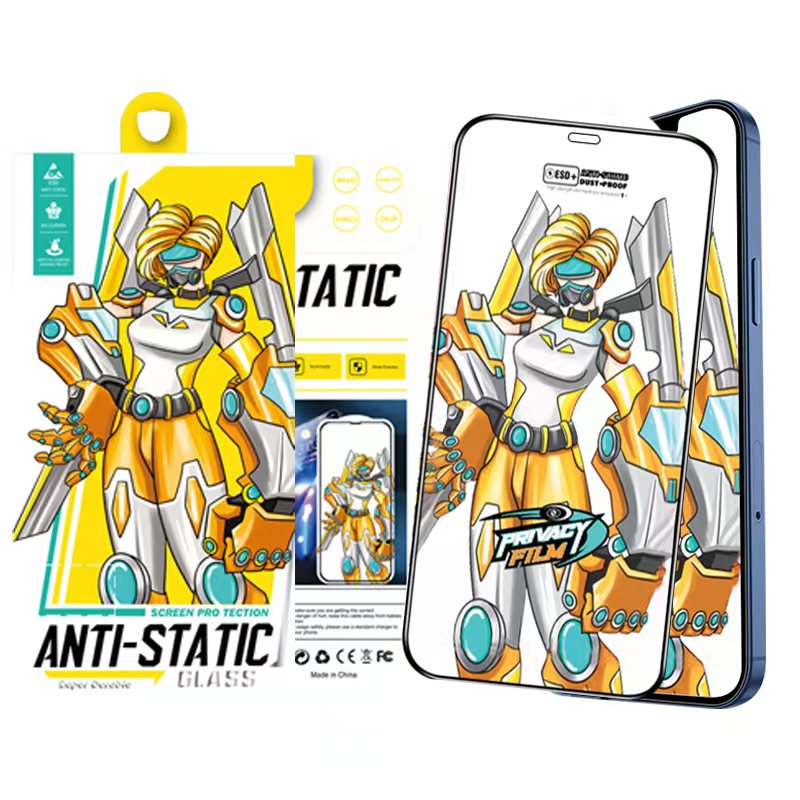
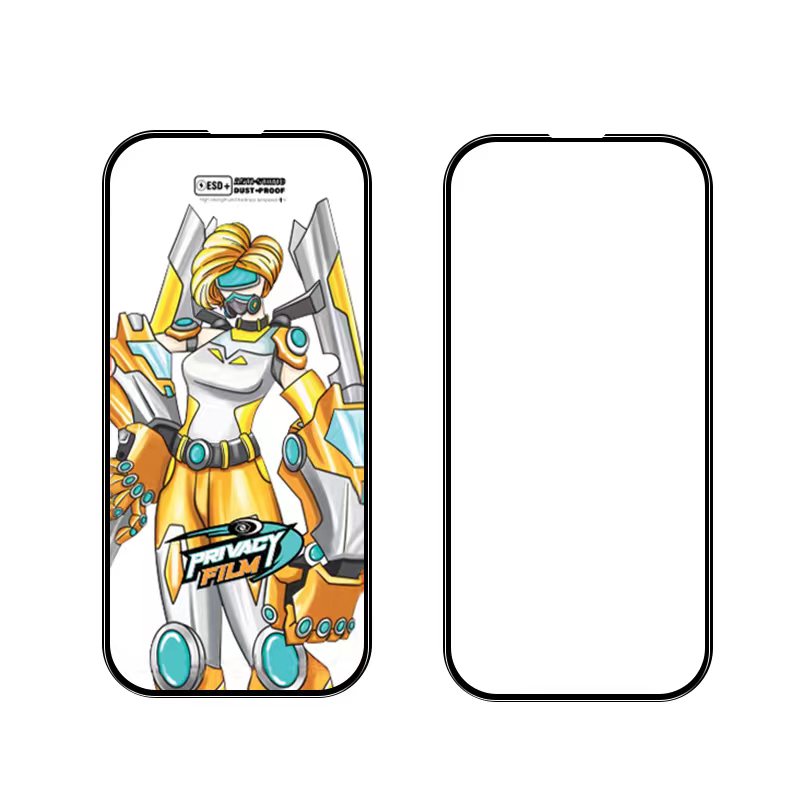
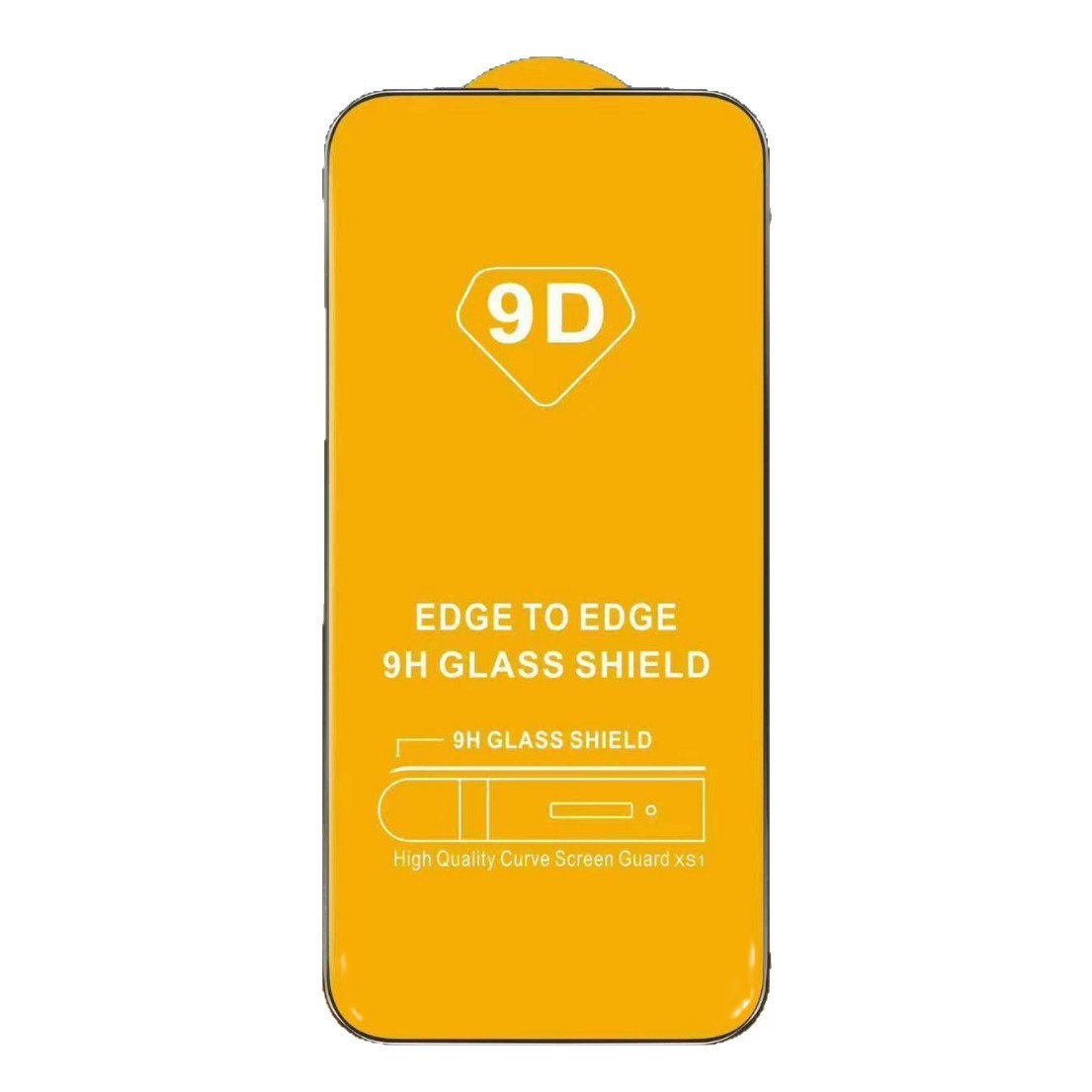
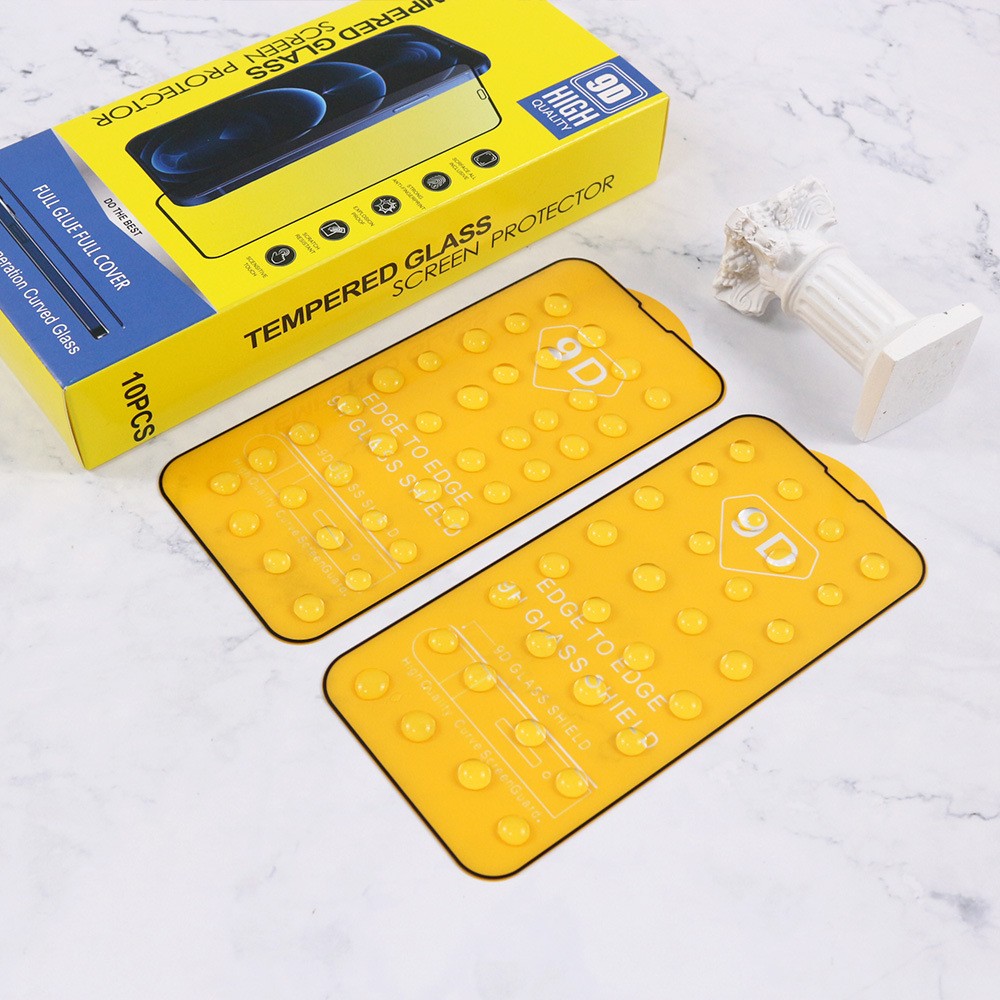
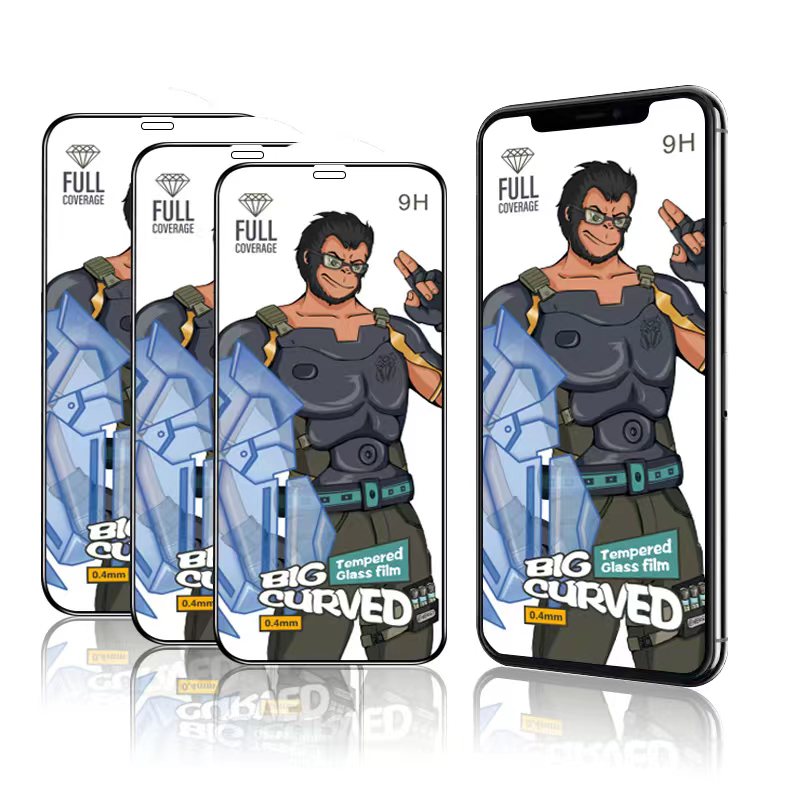
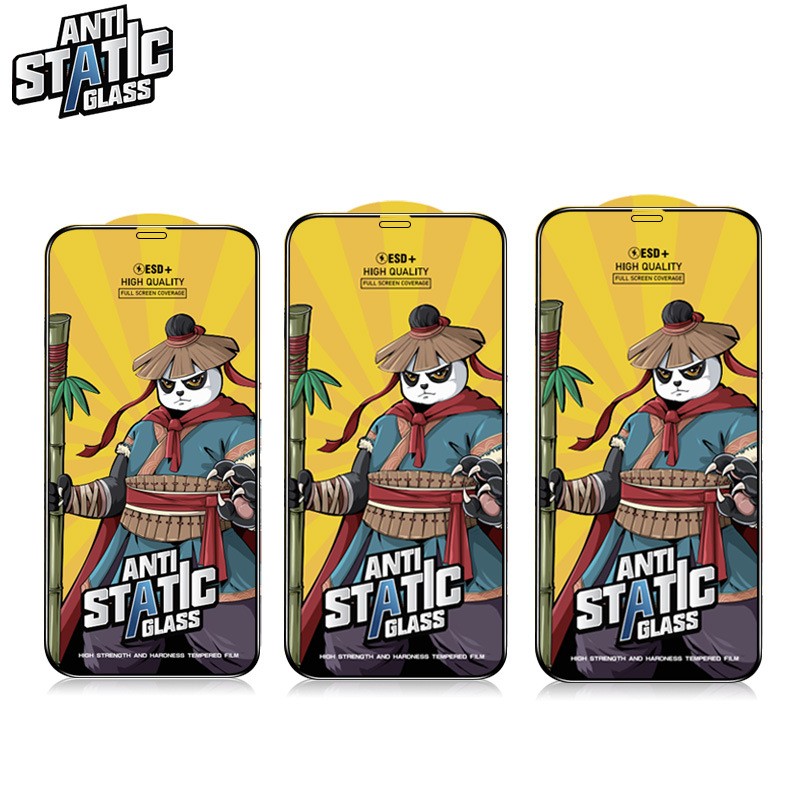
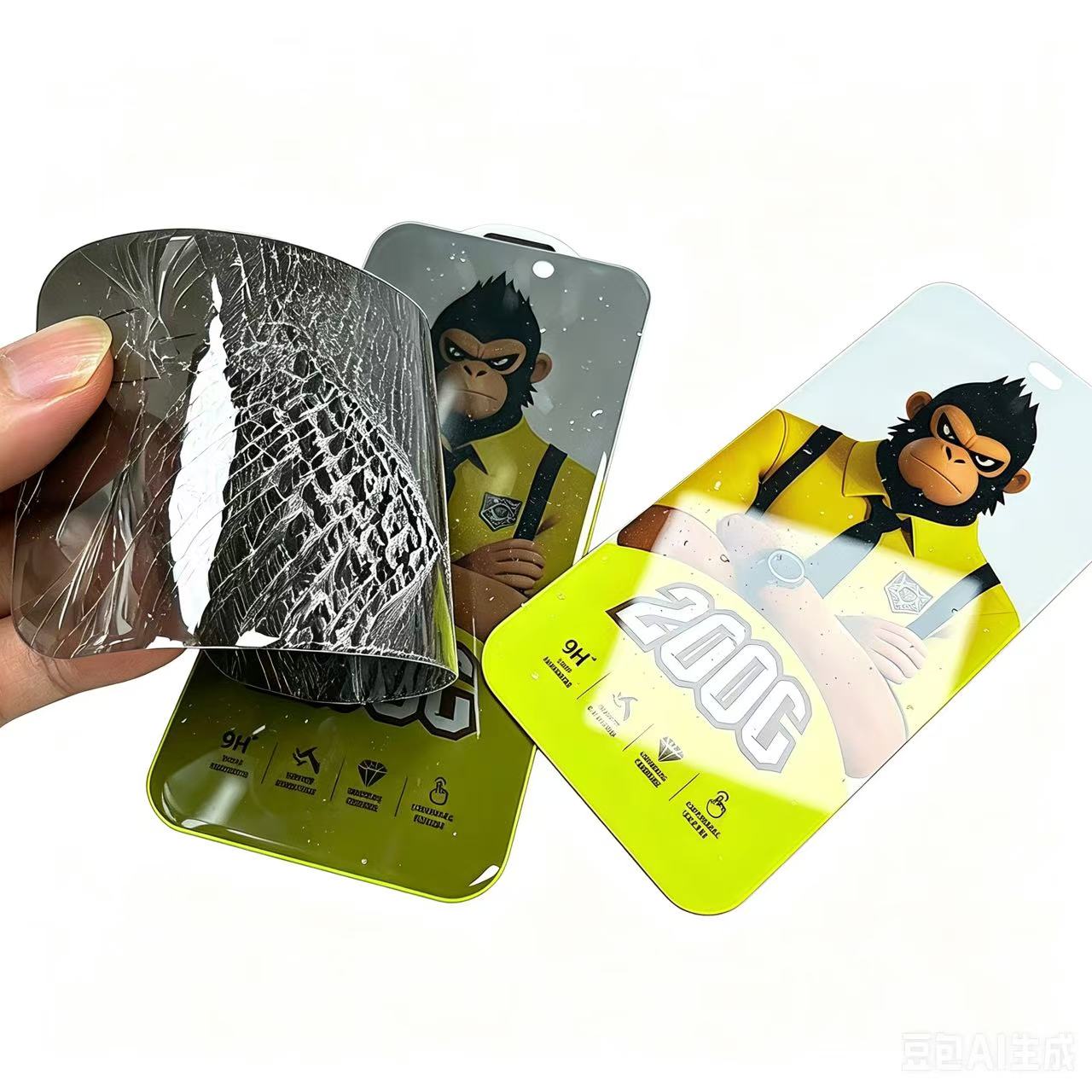
What is a backboard? It's the printed paper card behind the tempered glass packaging. Don't underestimate it — it's the first impression your brand makes on a customer:
- Your logo and brand name
- Your key selling points and feature descriptions
- Your QR code and after-sales contact information
- Your design elements, giving it a premium feel
- Complete differentiation from generic products on the market
What does a 1,000-unit MOQ mean for you?
- You don't need to tie up capital in tens of thousands of units
- You can test the market with a single model
- You can start small and scale up gradually
- Your brand has recognition from day one
Generic sellers sell glass. You sell a brand. The backboard is your brand's first face.
📩 Want to customize your own backboard? Contact us with your target models and market →
4. The Cost and Profit of Private Label: Why It's Worth It
The most common question from brand owners is: how much more does custom backboard printing cost, and how much more can I sell for?
The answer: about 10% more in cost, but 150–200% higher in profit.
Here's the math:
| Generic | Private Label | |
|---|---|---|
| Backboard cost | 0 | +10% |
| Retail price | Base price | 1.5–2x base price |
| Profit margin | Thin | High |
| Customer recognition | No brand recall | Your brand sticks |
| Repurchase rate | Low | High |
Why can a 10% cost increase translate to 150–200% higher pricing?
Because customers aren't buying a piece of glass — they're buying a brand. The logo, design, and selling points on the backboard transform the product from a commodity into a branded item. The same protector, with your branding and packaging, commands a different price in a retail store or on your own website.
That's the core value of private label: low investment, high brand premium.
A real example:
We have a client in the United States who runs his own retail chain. He never sold generic products — from day one, he went with his own branded packaging. His lineup covers iPhone 13 through 17 series, and his packaging has a street hip-hop style that stands out completely from the generic minimalist designs on the market. From what we understand, after switching to private label packaging, his retail price increased significantly compared to selling generic products. After testing the market with his first order, he now reorders 10,000+ units every quarter. His stores aren't selling "a piece of tempered glass" — they're selling his brand.
5. Private Label vs. OEM: Which Fits Your Brand Stage?
Many brand owners confuse these two terms and end up being led by their supplier.
- Private Label: Using the factory's existing molds and products, with your branding, your packaging, and your backboard. Low MOQ, ideal for brands just starting out.
- OEM: Building your own molds and producing to your specifications. High MOQ, suitable for established brands with stable sales volume.
If you're just starting out, Private Label is the more practical choice. No mold investment, no need to hold tens of thousands of units in stock — you can start with 1,000 units. Once sales stabilize, you can consider OEM and custom molds.
6. How to Tell Good Tempered Glass from Bad: 5 Core Metrics Every Buyer Should Know
Great packaging won't save a bad product. Customers will return it. If you want to build a premium brand, your product needs to meet these five standards.
📖 Further reading: Tempered Glass Screen Protector Wholesale Guide: HD vs Privacy vs Matte →
6.1 Glass Substrate: Soda-Lime vs. High-Aluminum
This is the most critical difference — it determines impact resistance and edge strength.
- Soda-lime glass: Mohs hardness around 5.5, compressive strength below 200 MPa. Cheap, but brittle at the edges and prone to shattering.
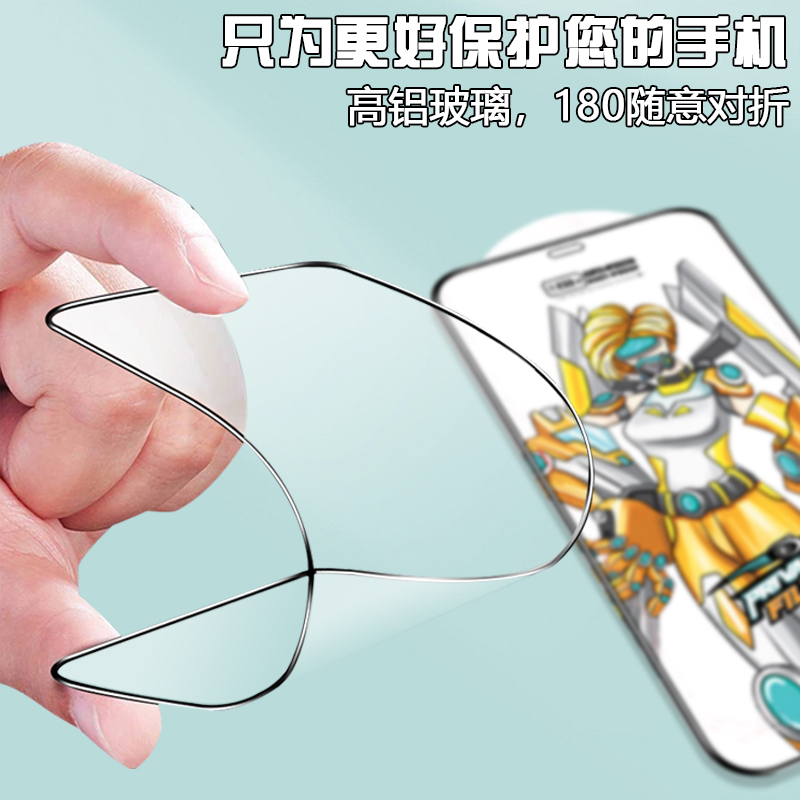
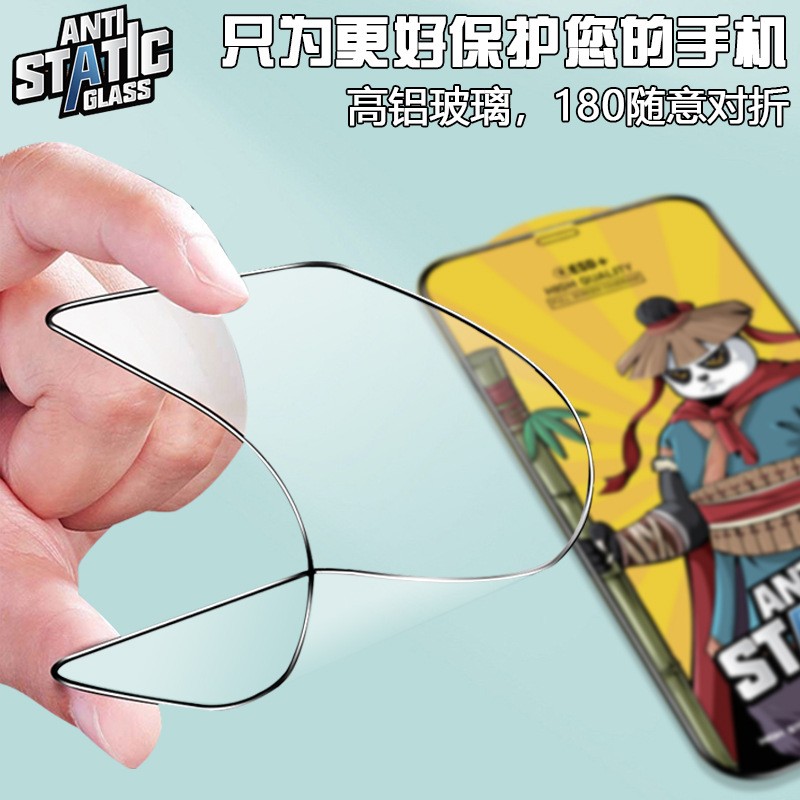
- High-aluminum glass: Ion-exchange treated, Mohs hardness 6.5–8, and approximately 3x the bending strength of soda-lime glass at the same thickness. Edges resist chipping and absorb impact better.
What to ask your supplier: "What's your Al₂O₃ content?" True high-aluminum glass contains 10–15%. If they can't answer, it's almost certainly soda-lime.
6.2 The 9H Myth: Don't Be Fooled by the Number
"9H" isn't Mohs hardness — it's a JIS K5600 pencil hardness test. A 9H pencil translates to roughly Mohs 6–7 on the mineral scale, which is just ordinary glass.
A genuine 9H film resists keys, coins, and most knife blades — but cannot resist quartz sand (Mohs 7), which is the real culprit behind screen scratches.
Buyer's takeaway: Don't pay extra for "10H." Ask for an ISO 15184 or JIS K5600 test report. If they can't provide one, move on.
6.3 Oleophobic Coating: Spray vs. Vacuum Electroplating
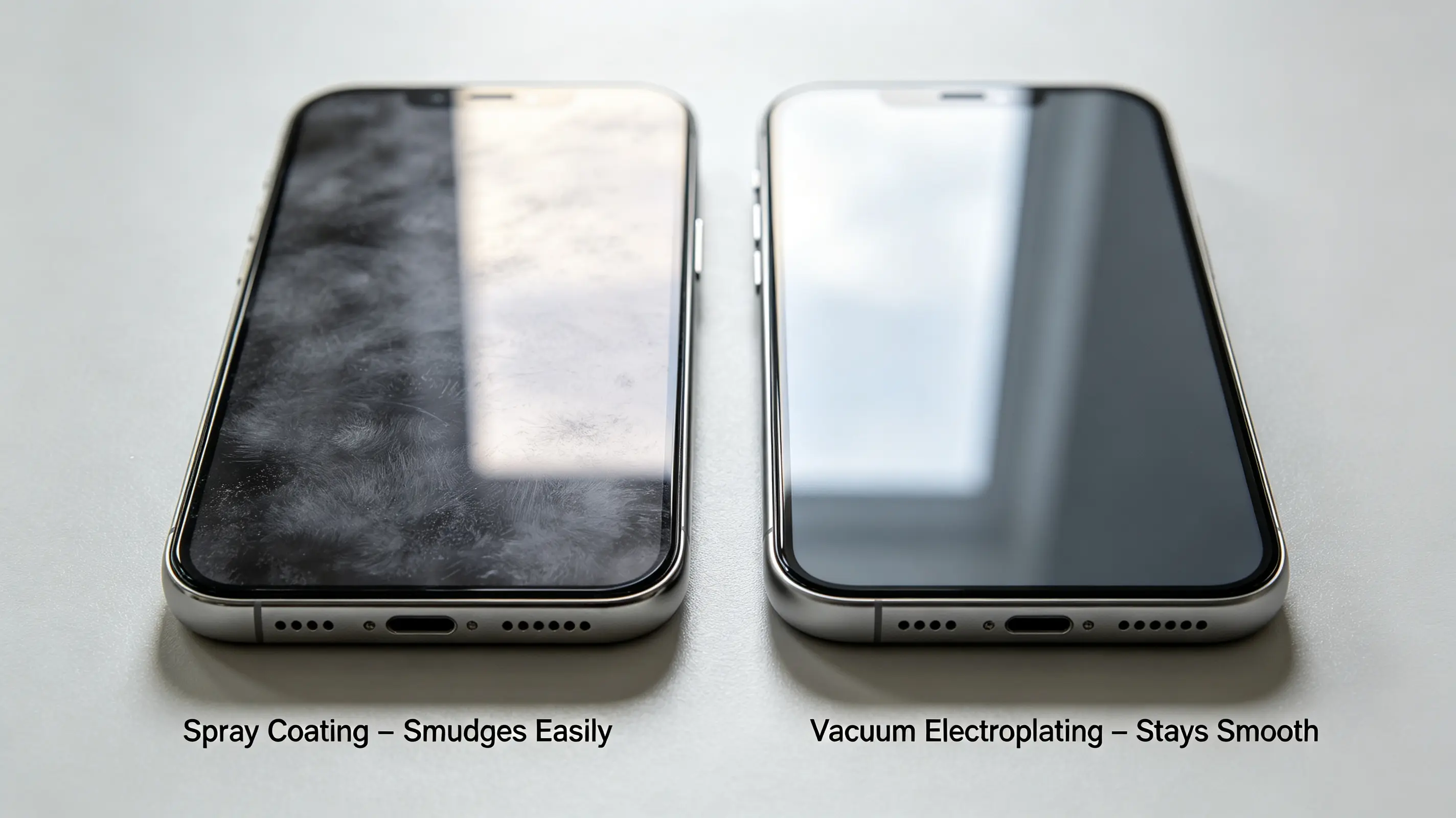
This determines how the screen feels after two weeks of use — and it's a major source of returns.
| Spray Coating | Vacuum Electroplating | |
|---|---|---|
| Cost | Low | Higher |
| Durability | Noticeable degradation in 2–4 weeks | 6+ months |
| Water contact angle | Often below 90° | Consistently above 110° |
| Customer experience | "Feels sticky after a month" | Stays smooth |
Buyer's takeaway: Ask for water contact angle data. Stable above 110° means vacuum electroplating.
6.4 Light Transmission: Clear, Not Cloudy
Quality films should have ≥92% light transmission. Hold the film up to text — if the text looks dimmer or grayer through it, the optical quality is below standard.
6.5 Edge Finish: 2.5D, 3D, or Polished
- 2.5D: Slightly rounded edges, average feel.
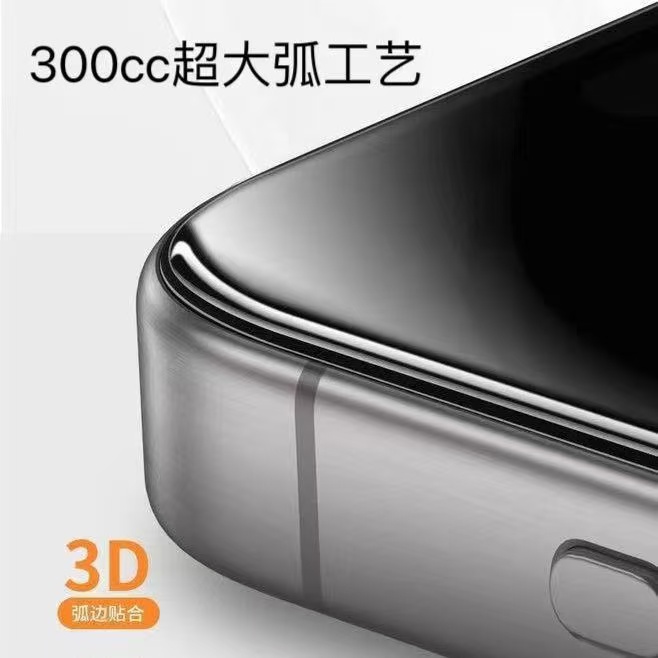
- 3D: Heat-bent edges for curved screens.
- Polished: Smooth edges that don't cut fingers or lift with phone cases. Preferred for premium brands.
Always ask for test reports: ISO 15184 pencil hardness, water contact angle data, and light transmission data. If they can't provide them, skip.
7. Packaging Customization: Your Brand's First Impression
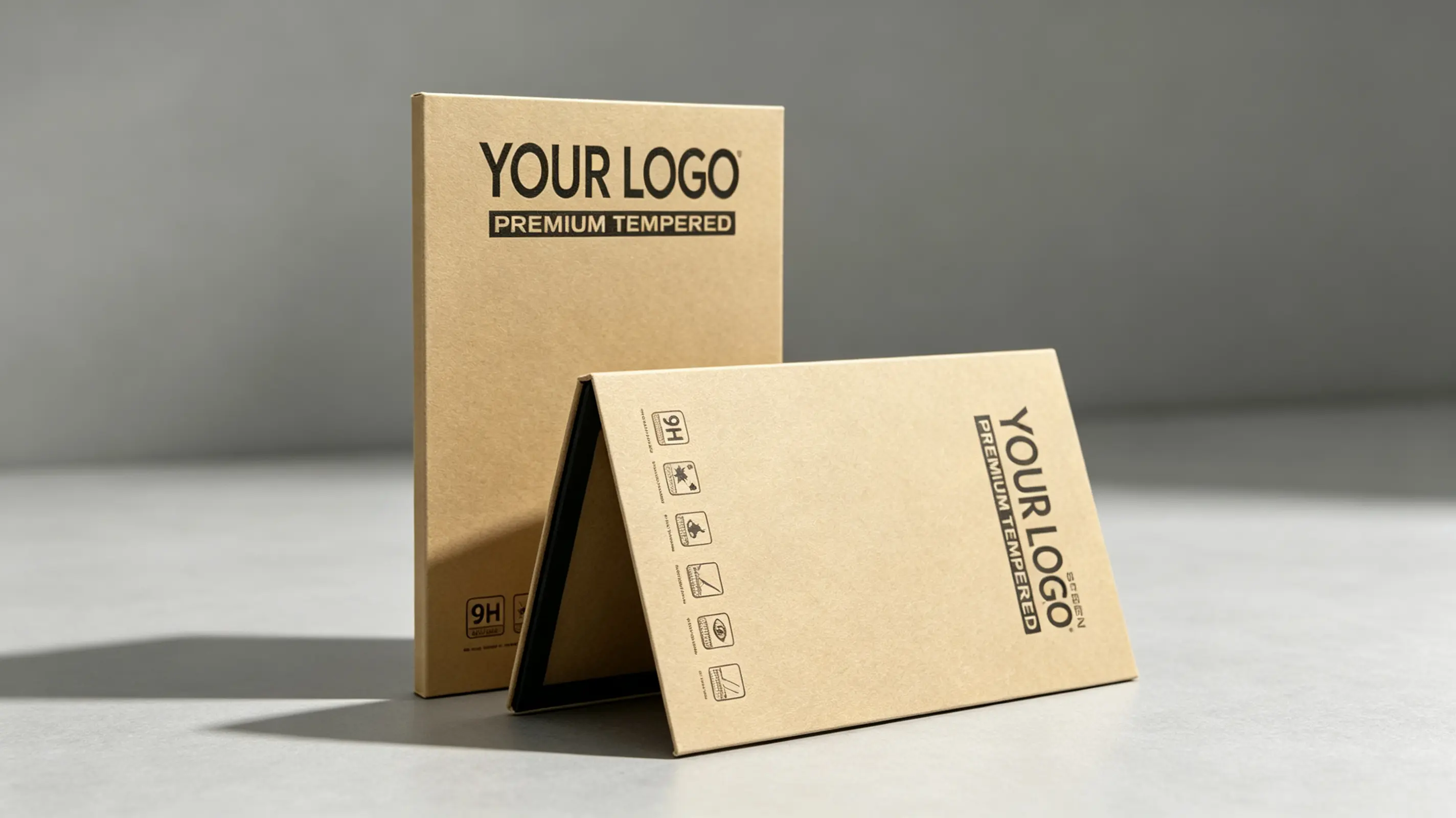
Packaging is your brand's front door. Private label customization covers:
- Retail packaging box: Strong design, thick material, high-quality printing with your brand and logo.
- Paper card backboard: Your brand name, selling points, QR code, and after-sales info — all printed on the backboard.
- Blister, poly bag, or envelope: Choose based on your channel. Your brand can be printed on these too.
- Master carton: Neutral by default — no supplier information. Orders of 10,000 units or more can customize their own branded master carton.
The golden rule: when your customer opens the package, they see your brand — and nothing else.
A note on cleaning kits and manuals:
Standard tempered glass wholesale orders do not include custom-printed cleaning kits or manuals. The usual setup is:
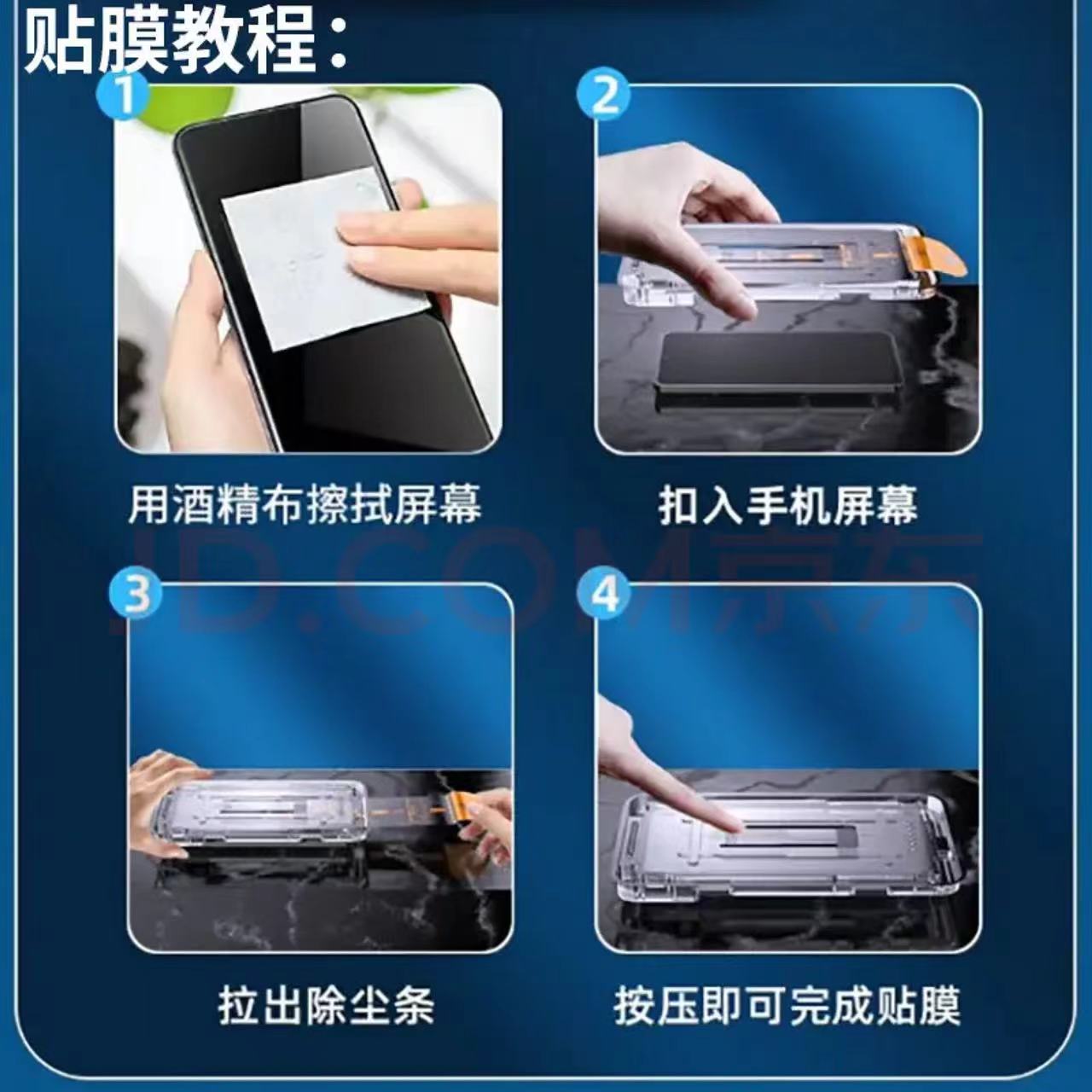
- Basic cleaning cloth and alcohol wipe included, white-label or generic packaging, no custom logo.
- Product instructions are typically printed on the back of the backboard, or replaced with icons.
- If you need custom cleaning kits or manuals, that's a separate customization project with higher MOQ and cost — confirm with your supplier separately.
For private label, focus on the backboard and retail box. That's the most practical, cost-effective, and MOQ-friendly way to build your brand.
8. How to Choose a Tempered Glass Supplier: 6 Questions That Matter
Don't just look at the quote. Asking these six questions will help you filter out 80% of unreliable suppliers:
- How many tempered glass factories do you work with?
A good trading company doesn't just sell one factory's output — it matches your market, budget, and quality requirements with the right factory. High-aluminum glass, privacy, matte, and private label packaging may come from different specialized factories. A factory only sells what it produces, so your options are limited. A trading company can integrate across factories and find a better fit. - What's the Al₂O₃ content of your high-aluminum glass?
True high-aluminum glass is 10–15%. If they can't answer, it's likely soda-lime. Ask for test reports. - Is the oleophobic coating sprayed or vacuum electroplated?
Electroplating costs more but lasts. Spray coating is cheaper but degrades within a month. Ask for water contact angle data. - Can you customize the backboard from 1,000 units?
This is the key to your brand differentiation. Factories usually have higher MOQs; a trading company can help pool orders or negotiate lower MOQ solutions. - Can the packaging be retail-ready?
If you're selling through your own store or independent website, the packaging needs to look like a real brand — shelf-ready or display-ready, not just a poly bag. - Can you seal and retain a sample?
To ensure repeat orders match. A trading company can arrange in-factory inspections, third-party inspections, and order follow-up.
A reliable supplier isn't afraid of detailed questions. A trading company's value isn't "middleman markup" — it's supply chain integration, lower MOQ, quality control, and export management.
9. From Sampling to Shipping: The Full Timeline
- Sampling: 3–5 days (product sample + packaging sample + backboard sample)
- Sample confirmation: You check quality, packaging, printing, and fit
- Sealed sample: Retained to ensure bulk order consistency
- Bulk production: 15–20 days, depending on quantity and packaging complexity
- Inspection: Check quality, packaging, and quantity
- Shipping: Sea freight, air freight, or express — we can work with your freight forwarder or arrange logistics to suit your needs
Certification support: ISO 9001, RoHS, and REACH, provided according to your market requirements.
10. Who This Is For — And Who It Isn't
This is for:
- Brand-owned phone shops / retail chains looking to sell their own branded tempered glass
- Independent website / Shopify / social commerce sellers who need brand presence and unboxing experience
- Regional wholesalers / distributors supplying local phone shops and repair stores
- Brand owners transitioning from generic products to differentiated offerings
- Entrepreneurs willing to test the market with a 1,000-unit MOQ
This is not for:
- Sellers only interested in $9.9 free-shipping generic products
- Sellers unwilling to invest time in brand and packaging design
- Sellers expecting zero risk and zero investment
Building a brand carries risk. It's not for everyone. But if you want to go premium, private label is worth it.
11. Why mytopcase.com Is the Right Brand Partner
mytopcase.com is a supply chain integrator working with multiple high-quality tempered glass factories, specializing in mobile accessory wholesale and private label customization:
- Multi-model tempered glass wholesale, fast turnaround on new phone launches
- High-aluminum glass, vacuum electroplating, privacy, matte, HD
- Private label packaging, logo printing, backboard customization
- MOQ from 1,000 units for custom backboards
- Orders of 10,000+ units can customize branded master cartons
- Neutral master cartons — no supplier information
- Retail-ready packaging for your store or independent website
- Small trial orders for brands just starting out
- Sample confirmation and sealed samples to ensure repeat order consistency
- Sea freight, air freight, and express — flexible logistics to match your needs
You focus on the brand. We handle the supply chain.
If you want to build your own tempered glass brand, go premium, and stand out from the generic competition, get in touch with mytopcase.com. Tell us your brand vision, your market, and your packaging requirements — we'll help you create your own premium tempered glass, sourced and customized from China.
Your brand. Your backboard. Your customers. Leave the expertise to the experts.
📩 Get a private label quote: Contact Us → | 🛒 Browse Wholesale Tempered Glass →
FAQ: Private Label Tempered Glass Wholesale
Q: What is the MOQ for custom backboard printing?
A: 1,000 units per model. You can start with one model and one design, test the market, then scale up.
Q: How much does custom backboard printing cost?
A: About 10% more than generic packaging. But the retail price can be 150–200% higher because customers are buying your brand, not a generic product.
Q: Can you print my logo on the retail box?
A: Yes. Your brand name, logo, selling points, QR code, and after-sales information can all be printed on the backboard and retail box.
Q: Will the packaging show any supplier information?
A: No. And if your order reaches 10,000 units, you can also customize your own brand on the master carton.
Q: Can I customize the cleaning kit or manual?
A: Standard orders include a basic cleaning cloth and alcohol wipe in generic packaging. Custom-printed cleaning kits or manuals require higher MOQ and cost. Confirm with your supplier separately.
Q: What's the lead time for a custom order?
A: Samples: 3–5 days. Bulk production: 15–20 days, depending on quantity and packaging complexity.
Q: Do you ship to my country?
A: Yes. We support sea freight, air freight, and express. We can also work with your own freight forwarder.
Q: Can I order a sample before placing a bulk order?
A: Yes. We provide product samples, packaging samples, and backboard samples for confirmation before mass production.
Q: How do you ensure the bulk order matches the sample?
A: We seal and retain a confirmed sample. Before shipping, you or a third-party inspector can check the bulk order against the sealed sample.
Q: What certifications do you provide?
A: ISO 9001, RoHS, and REACH. We can provide test reports based on your market requirements.